
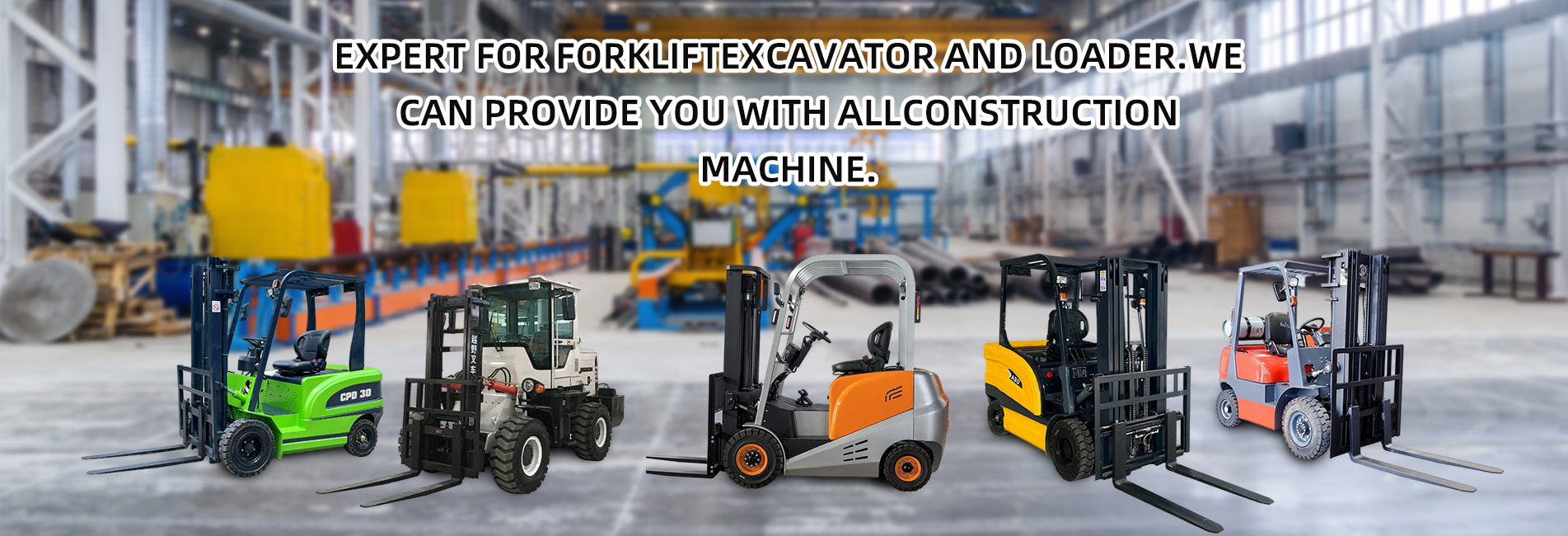
Why Overseas Buyers Favor Chinese New Energy (Lithium-ion) Forklifts
The global forklift industry is undergoing a shift from internal combustion engines to electric power. While established European, American and Japanese giants have accumulated profound expertise in internal combustion forklifts, China has achieved an overtaking opportunity on the lithium-ion battery track. Bolstered by advantages in cost, policy, complete supply chains and flexible delivery, Chinese new energy forklifts have become the mainstream choice for overseas purchasers.
I. Foundational Edge: The World’s Unmatched Complete Lithium-ion Battery Industrial Chain (Greatest Moat)
Batteries account for the largest share of costs for new energy forklifts, ranging from 25% to 35%.
- China hosts leading lithium-ion manufacturers including CATL and BYD. LFP (Lithium Iron Phosphate) technology is mature and mass-produced, bringing substantially lower costs for battery cells and PACK assemblies compared with overseas sourcing solutions.
- Highly localized supply of motors, motor controllers and BMS (Battery Management System) for the full three-electric system removes reliance on imported Western components.
- Many foreign brands source batteries externally, leading to extended supply chains, higher costs and uncontrollable lead times. For lithium-ion forklifts of the same tonnage, Chinese models generally cost only 60%–80% of equivalents from Linde, Toyota and Jungheinrich.
II. Superior Total Cost of Ownership (TCO), the Top Priority for Overseas Operators
1) Lower Initial Acquisition Barrier
Small and medium-sized logistics, manufacturing enterprises and rental fleets operate under tight budgets. Premium Western brands carry hefty markups, while Chinese new energy forklifts greatly reduce upfront capital expenditure.
2) Far Lower Operation & Maintenance Costs vs. Diesel Forklifts
- Zero exhaust emissions; no oil, filter replacements or regular servicing of worn engine components required.
- Lithium-ion batteries outperform lead-acid alternatives: faster charging, longer service life and no routine water top-up maintenance.
- Electricity costs remain far below diesel prices. With sustained fuel price hikes across many overseas markets, electric forklifts deliver outstanding long-term operational economics.
Many overseas customers calculate that the price premium of electric forklifts over used diesel models can be recovered within 3–5 years.
3) Comparison Against Western Electric Forklifts
Genuine spare parts for foreign brands are expensive and subject to long delivery times. Chinese components feature stronger interchangeability and lower prices, making them ideal for developing economies and overseas rental fleets.
III. Product Capabilities Tailored to Overseas Market Demands
- Proven fast-charging & battery swap solutionsMainstream Chinese lithium-ion forklifts support 1–2 hour fast charging to meet two-shift and three-shift continuous operations in overseas warehouses. A rich portfolio of battery-swappable variants serves high-throughput scenarios such as ports and e-commerce facilities.
- Robust environmental adaptabilityManufacturers offer customized configurations for different regions: moisture-proof versions for hot and humid Southeast Asia, dust-resistant, enhanced heat dissipation models for the Middle East, and low-temperature battery packages for European cold storage. Most units achieve IP54/IP67 ingress protection ratings.
- Far greater customization flexibility than Western brandsWestern OEMs prioritize standardization, with modification cycles stretching months and high customisation fees. Chinese manufacturers adopt modular platforms to rapidly adjust masts, attachments and overall dimensions, supporting narrow-aisle trucks, truck-mounted forklifts and special working-condition conversions.
- Comprehensive intelligent configurationsStandard features include telematics, remote fault diagnostics, ramp assist and rear-view cameras. Mature AGV autonomous lithium-ion forklift solutions align with overseas smart warehouse upgrading trends.
- Continuous improvement in compliance credentialsLeading brands such as HELI, Hangcha, BYD and Noblelift hold international certifications including CE and UL, satisfying EU Stage V emission standards, battery regulations and North American market access requirements.
IV. Perfect Alignment With the Global Green Policy Wave
- European MarketNumerous EU cities operate Low Emission Zones (LEZ). Regulations governing non-road mobile machinery will be further tightened in 2027, imposing restrictions on diesel forklifts. Many warehousing, food and pharmaceutical companies mandate zero-emission indoor equipment — a requirement directly met by Chinese lithium-ion forklifts.
- Southeast Asia, the Middle East & AustraliaA growing number of foreign-owned factories and cross-border logistics firms pursue ESG and carbon neutrality targets; new energy equipment has become a hard tender requirement. Diesel forklifts generate exhaust fumes inside enclosed warehouses, exposing factories to staff health risks and environmental fines.
V. Advantages in Delivery & International Trade
- Shorter lead timesForeign brands frequently struggle with capacity constraints and component shortages, with lead times ranging 6–12 months. Major Chinese manufacturers maintain ample production capacity for standard models and support SKD (Semi-Knocked Down) exports.
- Global manufacturing layout to mitigate tariffsHELI, Hangcha and other producers operate assembly plants in Thailand and Europe. Leveraging RCEP and local manufacturing policies cuts tariffs and further strengthens price competitiveness.
- Diversified sales modelsSolutions include complete machine exports, SKD shipments, cross-border financial leasing and hire purchase schemes, matching capital needs of clients across different countries.
VI. Market Segmentation: Priorities Vary by Region
- European Customers: Focus on CE compliance, lithium battery quality, intelligent fleet management and ESG credentials; tend to select top-tier Chinese OEMs.
- Southeast Asia & Latin America: Prioritize cost performance, accessible spare parts and resistance to high heat and humidity; heavily purchased by rental operators.
- Middle East & Africa: Value driving range, dust-proof heavy-load performance and low maintenance costs as alternatives to costly diesel forklifts.
- North American Market: Emphasize safety certifications and battery traceability; gradually adopting mid-to-high-end Chinese lithium-ion models.
Objective Shortcomings (Customer Concerns & Continuous Improvement Priorities for Manufacturers)
- When it comes to high-capacity units above 10 tonnes, Chinese models still lag top Western brands in precision hydraulic control and long-term stability under extreme continuous working conditions.
- The density of local after-sales service networks in certain regions remains inferior to established foreign players.
- Limited brand premium; mega high-end automated warehouses still tend to select Toyota and Linde.
Concluding Summary
European, American and Japanese manufacturers dominated the internal combustion forklift era. Amid the electrification transition, China leverages its lithium-ion battery industrial chain to compete on new ground: comparable performance, lower procurement costs, reduced operational expenses, flexible delivery and full alignment with global environmental regulations. These strengths resonate strongly with logistics, manufacturing and rental businesses, driving explosive overseas purchasing demand.