
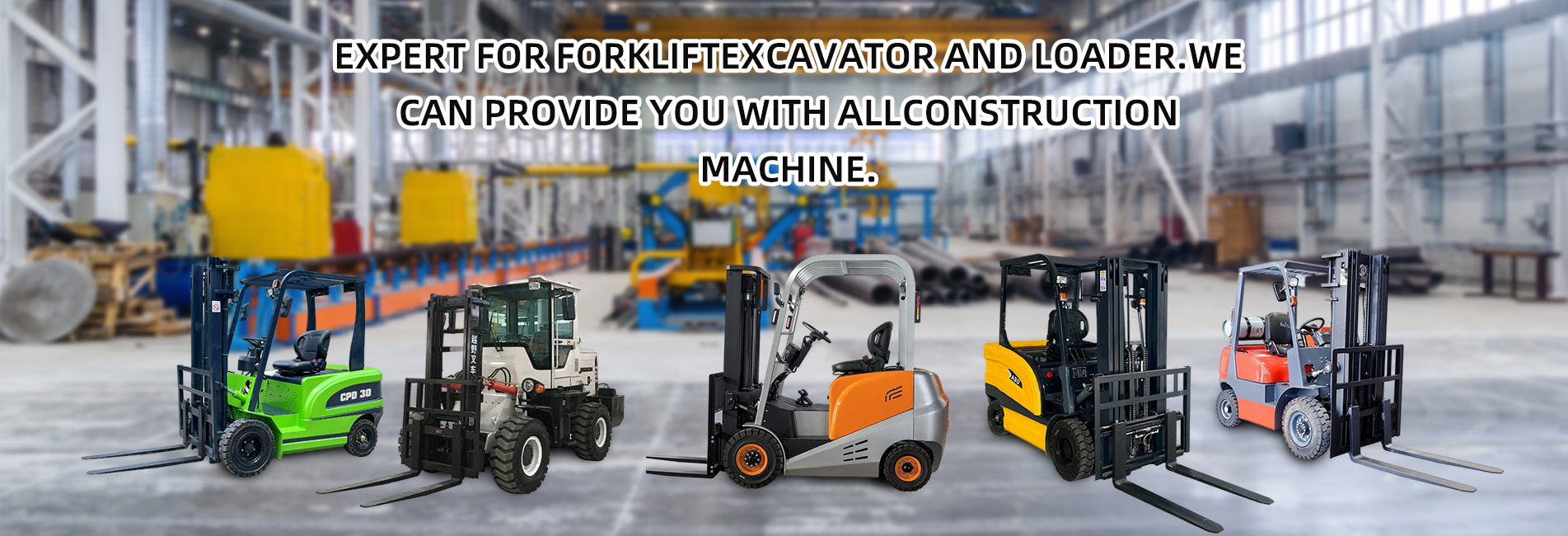
During the rapid phase-out of internal combustion (IC) forklifts worldwide from 2025 to 2030, the core development logic for electric forklifts is as follows: in the short term, the industry will reap massive dividends from existing fleet replacement; in the medium to long term, it will be driven to upgrade technologies and business models. Meanwhile, the sector faces four major challenges: cost recovery pressure, inadequate supporting infrastructure, supply chain volatility and trade barriers, as well as poor adaptability to extreme operating conditions. Below is a detailed breakdown of the opportunities and challenges.
I. Opportunities: Three Major Dividends Driven by Strict Policies
1. Vast Existing Fleet Replacement Market with Surging Demand
- European Union: A zero-emission target is set for off-road machinery by 2035, alongside stringent Stage V emission standards taking effect in 2027. Around 400,000 IC forklifts across Europe will need to be replaced before 2030.
- China: The Carbon Emission Limits for Industrial Vehicles mandates the phase-out of 200,000 National Standard III and below IC forklifts by 2027, unlocking a replacement market worth approximately 36 billion RMB.
- North America: New EPA regulations will ban sales of high-emission IC vehicles starting in 2026, putting roughly 300,000 IC forklifts in the U.S. up for renewal.
2. Improved Economic Viability & Policy Subsidies Boost Market Penetration
- Sustained high oil prices: Geopolitical tensions keep fuel costs elevated. For a 3-ton IC forklift, annual fuel expenses reach about 75,000 RMB, compared with merely 15,000 to 20,000 RMB for its electric counterpart. The total cost of ownership (TCO) of electric forklifts is 30% to 50% lower.
- Enhanced subsidies: Europe and North America offer subsidies of 20% to 40%, while China provides 10% to 15% subsidies for equipment upgrades. This narrows the actual price gap between electric and IC forklifts to under 10%.
- Rising penetration rate: Europe’s electrification rate will climb from 60% to 82% by 2030; North America from 40% to 70%; and China from 60% to 96%.
3. Industrial Chain Advantages & Globalization Opportunities for Chinese Brands
- Ample lithium battery capacity: China accounts for over 60% of the world’s power battery production. Lithium iron phosphate (LFP) batteries boast prominent cost advantages, with battery pack prices dropping to 0.65 RMB/Wh in 2025.
- Prime export window: RCEP and the Belt and Road Initiative have reduced tariffs. The electrification rate in Southeast Asia, the Middle East and Latin America will rise from 10% to 40% by 2030, where cost-effective Chinese brands are expected to capture more than 60% of the market share.
- Substitution of foreign brands: Foreign players such as Toyota and KION command a 20%–25% price premium with delivery cycles of 6 to 12 months. By contrast, Chinese manufacturers deliver within 3 months at a 30% lower price. China’s global market share will grow from 40% to 50% by 2030.
II. Challenges: Four Bottlenecks to Overcome Amid Accelerated Replacement
1. High Initial Investment & Low Acceptance Among Small and Medium-Sized Enterprises (SMEs)
- Wide price gap: Electric forklifts cost 30% to 50% more than IC models of the same load capacity (a 3-ton IC forklift costs around 120,000 RMB, versus 180,000 RMB for an electric one).
- Long payback period: Due to underutilized operations, SMEs face a payback cycle of 3 to 5 years, longer than their expected 2 to 3 years.
- Market resistance: 60% of SMEs extend equipment service lives to 7–8 years. Used IC forklifts, priced at 30%–40% of new units, further divert market demand.
2. Undersized Charging & Battery Swapping Infrastructure and Limited Scenario Adaptability
- Power grid renovation: 50% to 60% of old warehouses require power grid upgrades, adding 25% to overall project costs for charging facilities.
- Charging efficiency: Fast charging fills a lithium battery to 80% in one hour, yet round-the-clock operations at ports and steel mills still rely on battery swapping or hydrogen fuel solutions.
- Poor performance in extreme conditions: Electric forklifts lag behind IC models in driving range and reliability when handling loads over 5 tons, operating at extreme low temperatures (-30°C), or working in dusty and explosion-proof environments.
3. Volatile Supply Chains & Core Technology Deficits Undermine Cost Control and Product Quality
- Fluctuating lithium battery material prices: Lithium carbonate prices remain unstable. Battery pack costs only fell by 8% in 2024, below the projected 15% reduction target.
- Reliance on imported core components: Dependence on imported high-end electronic controllers, IGBTs and high-precision sensors stands at 60% to 78%, leading to high costs and unstable supply.
- Overcapacity in low-end segments: 73% of manufacturers only perform simple "IC-to-electric conversion", resulting in severe homogenization. Fierce price wars have cut gross profit margins by 5 to 8 percentage points.
4. Mounting Trade Barriers & Compliance Costs Complicate Overseas Expansion
- Anti-dumping measures in Europe and America: The EU Carbon Border Adjustment Mechanism (CBAM) launched in 2026 and U.S. tariff barriers raise export costs for Chinese electric forklifts by 10% to 20%.
- Strict certification barriers: EU CE and U.S. UL certifications involve long lead times and high fees, unaffordable for most SMEs.
- Localization requirements: Europe and North America mandate a local procurement rate of over 40%, forcing Chinese enterprises to build overseas plants in regions like Mexico and Thailand with substantial short-term capital input.
III. Balancing Opportunities and Risks: Strategic Priorities for Enterprises
Key Opportunities to Seize
- Secure fleet replacement orders: Focus on policy-driven regions including the Beijing-Tianjin-Hebei Region, the Yangtze River Delta and the Pearl River Delta to capture orders for phasing out National Standard III and below IC forklifts.
- Adopt Battery-as-a-Service (BaaS) and financial solutions: Offer battery leasing (cutting down payments from 200,000 RMB to 50,000 RMB), installment plans and trade-in programs to lower adoption thresholds for SMEs.
- Expand into emerging overseas markets: Penetrate Southeast Asia, the Middle East and Latin America to bypass trade barriers in Europe and America, prioritizing scale expansion before technological upgrading.
Key Risks to Guard Against
- Avoid cutthroat price wars: Pursue differentiation via lithium battery technology and intelligent functions to escape low-end homogenized competition of simple IC-to-electric conversion.
- Mitigate infrastructure risks: Cooperate with industrial parks to build shared charging and battery swapping stations, and launch battery-swappable forklifts for non-stop operations.
- Ensure supply chain security: Establish partnerships with 2 to 3 core battery suppliers, and independently develop battery management systems (BMS) and electronic controllers to reduce import reliance.