
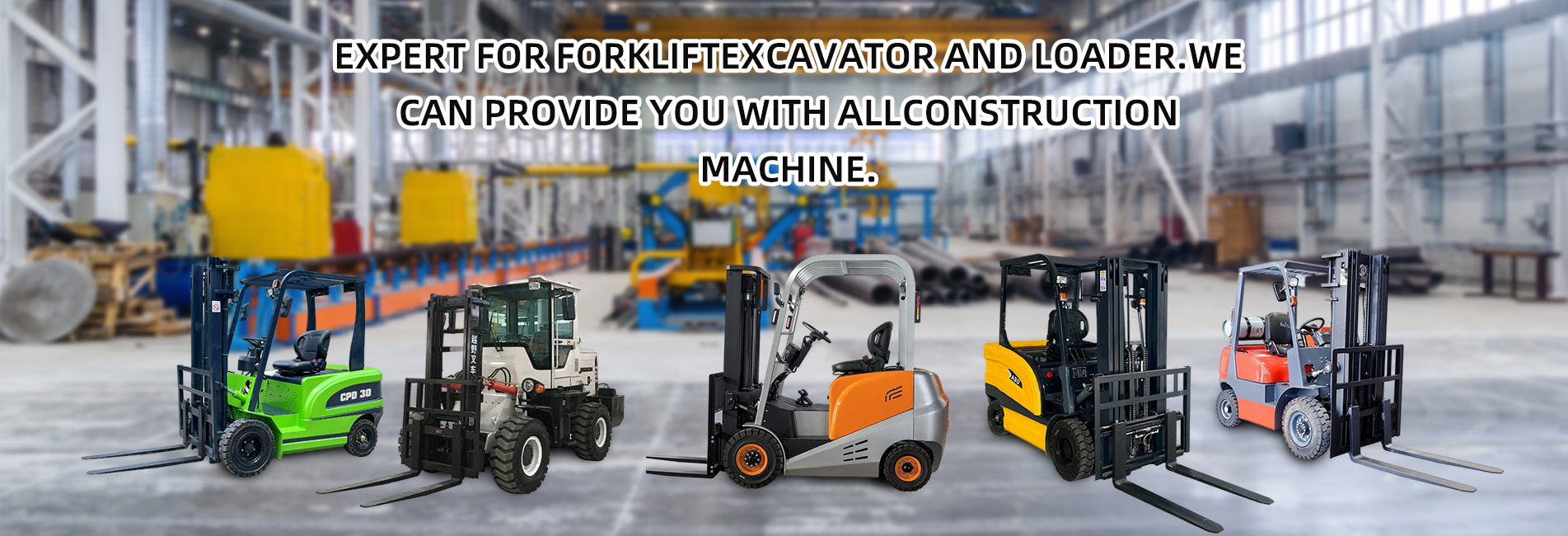
Against the backdrop of escalating international geopolitical conflicts, volatile energy prices, tightening global "dual carbon" policies and restructuring supply chains, electric forklifts are no longer an optional choice but a definite growth track. Its development prospects can be summarized as follows: strong policy-driven momentum, cost reduction via lithium batteries paired with value enhancement through intelligent technology, global replacement alongside robust growth in emerging markets, and the global expansion leveraging China’s complete industrial chain advantages. This paper elaborates on four dimensions: the international landscape, core opportunities, challenges and countermeasures, and the future market pattern.
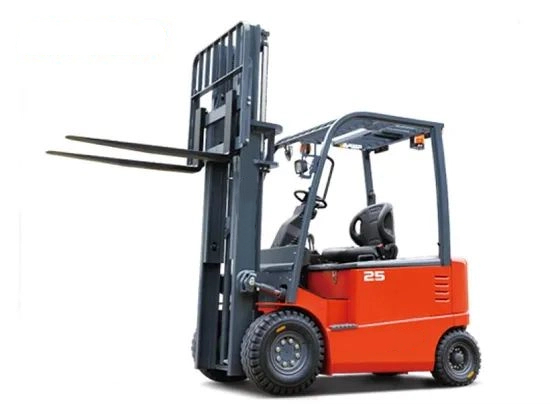
I. Current International Landscape: Four Major Factors Reshaping the Industry
1. Dramatic shifts in the energy landscape: Soaring oil prices highlight the economic merits of electrification
Conflicts in the Middle East (around the Strait of Hormuz) have disrupted global crude oil supply and kept oil prices at a high level, driving up operating costs for internal combustion (IC) forklifts.Electric forklifts boast a significantly lower Total Cost of Ownership (TCO). For a 3-ton IC forklift, the annual fuel cost stands at approximately 75,000 yuan, compared to merely 15,000 to 20,000 yuan for its electric counterpart, which also incurs lower maintenance expenses.Conclusion: Every 10% rise in oil prices lifts the penetration rate of electric forklifts by 2 to 3 percentage points.2. Tightening global "dual carbon" policies: Compliance pressures force accelerated replacement
- European Union: Non-road mobile machinery must achieve zero emissions starting in 2035, speeding up the phase-out of IC forklifts.
- North America: The EPA has rolled out new non-road emission regulations, banning the sale of high-emission IC vehicles after 2026.
- Emerging markets: India and Southeast Asian countries have followed suit with stricter emission rules, prioritizing electrification at ports and logistics parks.
3. Supply chain restructuring: Regionalization and nearshoring fuel equipment renewal demand
Sino-US trade frictions and geopolitical tensions have prompted manufacturing reshoring and nearshoring to regions including Mexico, Vietnam and Indonesia, where newly built production facilities are fully equipped with electric forklifts.In the wake of Europe’s energy crisis, investment in industrial automation and electrification has accelerated, shortening the replacement cycle of warehouse equipment to 5–7 years.4. China’s industrial chain advantages: The world’s most complete ecosystem for lithium batteries and forklift manufacturing
- Lithium batteries: Enterprises such as CATL and BYD account for over 60% of the world’s power battery production capacity, with lithium iron phosphate (LFP) technology delivering notable cost advantages.
- Forklifts: Brands including Heli, Hangcha and EP Equipment hold a combined global market share of more than 40%, with exports registering a compound annual growth rate of 19.22% from 2016 to 2025.
- Delivery: Orders can be fulfilled within 3 months, while overseas competitors generally require 6 to 12 months, reflecting robust supply chain stability.
II. Four Core Development Paths for Electric Forklifts
1. Technical routes: Lithium batteries as the mainstream, supplemented by hydrogen fuel cells and solid-state batteries
- Lithium batteries (mainstream): Dominated by LFP batteries. 80V/96V high-voltage platforms are widely adopted, featuring fast charging (80% charge within 1 hour), long service life (3,000–5,000 charge-discharge cycles) and maintenance-free operation.
- Hydrogen fuel cells (for heavy-duty and round-the-clock operations): Ideal for forklifts over 5 tons working 24/7 at ports and steel mills. Refueling takes only 3 to 5 minutes with zero emissions.
- Solid-state batteries (expected to gain traction after 2028): Boast a 50% increase in energy density, higher safety performance and a runtime exceeding 12 hours.
2. Product upgrading: Intelligence and scenario customization to boost added value
Intelligent functions (standard configuration)
- Vehicle networking: Remote monitoring, fault early warning and battery health management.
- Human-machine collaboration: AI vision and SLAM navigation. L2–L4 level automated forklifts have achieved large-scale commercial application in e-commerce and cold chain logistics.
- Safety enhancements: Automatic obstacle avoidance, overspeed alerts and operator fatigue monitoring.
Scenario customization (high profit margin)
- Cold chain: Special low-temperature batteries and sealed electronic control systems for operation at -30°C.
- Explosion-proof models: Explosion-proof motors and battery packs for chemical, oil and gas facilities.
- Narrow aisle models: Reach trucks and three-way stackers that raise warehouse space utilization by 30%.
3. Market expansion: Dual growth drivers of global replacement and emerging markets
Mature markets in Europe and America (stock replacement)
- Europe: The electrification rate exceeds 60%, with a 100% target set for 2030. Chinese brands are expected to lift their local market share from 15% to 30% by 2030.
- North America: The electrification rate stands at 40% and is rising rapidly amid policy incentives. Building local plants in Mexico to avoid tariffs has become a common practice.
Emerging markets (incremental growth)
- Southeast Asia: Booming e-commerce and manufacturing will drive the regional electrification rate from 10% to 40% by 2030. The Belt and Road Initiative and RCEP create favorable conditions for Chinese exports.
- Middle East & Latin America: Energy transition and improved logistics infrastructure fuel strong demand for cost-effective electric forklifts.
Domestic Chinese market (stock renewal + new demand)
The electrification rate will reach 80% by 2026, with lithium battery-powered models taking up 60% of the market. China’s National Stage IV emission standard is accelerating the phase-out of IC forklifts.4. Business model evolution: From equipment sales to an integrated ecosystem of "equipment + batteries + services"
- Battery-as-a-Service (BaaS): Cuts upfront investment (initial payment reduced from 200,000 yuan to 50,000 yuan). Customers pay monthly rent, with all battery maintenance and replacement services included.
- Full-lifecycle services: Remote operation & maintenance, preventive upkeep and second-hand equipment buyback. These services boost customer loyalty and raise gross profit margins by 5 to 10 percentage points.
- Overseas localized operation: Establishing manufacturing bases in Mexico, Thailand and other regions, partnering with local distributors and setting up service centers to circumvent trade barriers and improve response efficiency.
III. Core Challenges and Coping Strategies
1. Challenges
High upfront costs, battery recycling pressures, trade barriers and gaps in high-end core technologies.2. Countermeasures
- High upfront investment: Electric forklifts cost 30%–50% more than IC models, limiting adoption among small and medium-sized enterprises.Solutions: Promote BaaS, financial installment plans and leverage government subsidies (subsidies reach 20%–40% in Europe and America).
- Battery recycling risks: Over 500,000 tons of spent lithium batteries will be generated by 2030, bringing high environmental compliance costs.Solutions: Build in-house recycling systems and cooperate with battery manufacturers for secondary utilization in energy storage and low-speed vehicles.
- Trade barriers: Anti-dumping measures, the EU Carbon Border Adjustment Mechanism (CBAM) and technical standard restrictions in Europe and America.Solutions: Build overseas production bases, adopt local procurement and participate in the formulation of international industry standards.
- High-end technology gaps: Reliance on imports for high-end electronic controls, motors and sensors.Solutions: Increase R&D investment, advance industry-university-research collaboration and acquire overseas tech enterprises.
IV. Future Outlook: Globalization of Chinese Brands Led by Electrification and Intelligence
From 2026 to 2030, the global electric forklift market will expand from 53.4 billion US dollars to 150 billion US dollars, representing a compound annual growth rate of 14.4%.- Chinese brands: Global market share will rise from 40% to 50%, with Heli, Hangcha and EP Equipment ranking among the world’s top five forklift manufacturers.
- Technology landscape: Lithium batteries and intelligent systems will become standard configurations. Hydrogen and solid-state batteries will make breakthroughs in specific scenarios, and human-machine collaboration will gain widespread adoption.
- Business models: BaaS and full-lifecycle services will become mainstream. The proportion of revenue from equipment sales will decline, while service revenue will account for 30% of total revenue.
Summary: Development Path for Electric Forklifts — Seize Trends and Achieve Breakthroughs in Technology, Market and Business Models
- Short term (1–2 years): Capitalize on high oil prices and tightening policies to accelerate lithium battery replacement and expand exports.
- Medium term (3–5 years): Focus on intelligent upgrading and scenario customization, build a BaaS and service ecosystem to enhance product added value.
- Long term (5–10 years): Make breakthroughs in high-end technologies and deepen overseas localization, evolving from product export to technology and standard output, and ultimately achieving full brand globalization.