
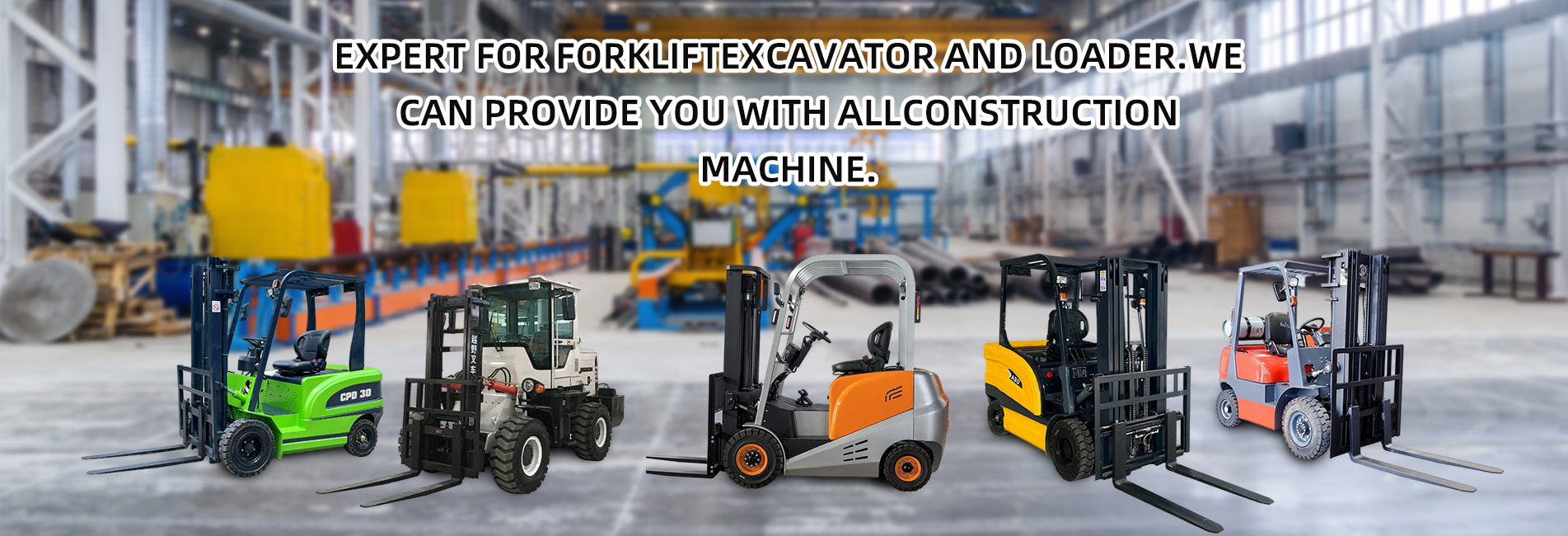
Factors Influencing Forklift Stability and Their Analysis
Forklift stability refers to the vehicle’s ability to resist tipping (longitudinal/transverse) and skidding during operations such as traveling, loading/unloading, turning, and ramp work. It directly determines operational safety and efficiency. The influencing factors can be systematically categorized into five core groups: vehicle-specific parameters, load conditions, operating environment, operational behavior, and maintenance status, with detailed breakdowns as follows.I. Vehicle-Specific Parameters (Design and Manufacturing Level, Core Foundation)
Wheelbase and Track Width
A longer wheelbase and wider track width result in greater longitudinal and transverse stabilizing moments, enhancing anti-tipping capability. Narrow-aisle forklifts inherently have weaker transverse stability than standard models due to their narrower track width; short-wheelbase forklifts are more prone to longitudinal tipping (e.g., when climbing slopes with heavy loads).Center of Gravity (COG) Position
- Unloaded COG: Determined by the layout of components such as the frame, battery/counterweight, and cab. A lower COG positioned closer to the frame center ensures better stability.
- Counterweight Design: The weight and installation position of the cast iron counterweight at the rear of internal combustion forklifts and the battery pack (which also serves as a counterweight) in electric forklifts directly affect longitudinal balance. Insufficient counterweight can lead to forward tipping under heavy loads.
Mast Structure
Mast height, tilt angle, and material influence the height of the load’s COG. Full-free lift masts and multi-stage masts further elevate the COG, reducing stability.Tires and Suspension
- Tire Specifications and Air Pressure: Tires with low air pressure have a larger contact area and stronger grip, improving stability; overinflated tires are prone to skidding and tipping; uneven tire wear causes unbalanced force distribution.
- Tire Types: Solid tires are suitable for heavy loads and hard surfaces, while pneumatic tires offer better shock absorption but lower load-bearing capacity; anti-slip and explosion-proof tires can enhance stability under special operating conditions.
- Suspension System: Most forklifts adopt rigid suspension, while some high-end models use hydraulic shock absorption, which reduces COG displacement caused by jolting and improves driving stability.
Braking and Steering Systems
Uneven braking or delayed brake response can cause vehicle skidding during emergency stops; excessive steering clearance or over/under-steering can easily trigger turning tipping. Although four-wheel steering forklifts improve maneuverability, precise control of the steering angle is required.II. Load Conditions (Core Operational Variables, Primary Cause of Tipping)
Load Weight
Exceeding the rated load (especially when the mast is tilted forward or the lifting height is increased) shifts the load’s COG forward, disrupting longitudinal balance and easily leading to forward tipping. Overloading is the primary cause of forklift tipping accidents.Load COG Offset
- Transverse Offset: Failure to center the load on the forks or unilateral loading creates a transverse eccentric moment, resulting in transverse tipping.
- Longitudinal Offset: Excessively forward placement of the load (overextended forks) or an overly large mast forward tilt angle causes the load’s COG to move beyond the front axle, leading to longitudinal tipping.
Lifting Height
The higher the load is lifted, the higher the COG, the smaller the stabilizing moment, and the drastically reduced anti-tipping capability. During high-altitude operations (e.g., picking and placing goods on high shelves), even light loads may tip sideways due to the elevated COG.Load State
Loose or easily swaying loads (e.g., cartons, bagged goods) experience dynamic COG displacement due to vehicle jolting and turning during operation, exacerbating stability risks. The sloshing of liquid loads (e.g., barreled oil) also generates additional impact forces.III. Operating Environment Conditions (External Constraints, Affecting Grip and Force Balance)
Ground Conditions
- Flatness: Potholes, slopes, and steps tilt the forklift and alter its COG position; traveling with heavy loads on uneven surfaces may cause tipping due to instantaneous COG displacement.
- Pavement Material: Concrete/asphalt surfaces provide strong grip, while icy, oily, or wet surfaces significantly reduce tire adhesion, leading to skidding; sandy or muddy ground can cause tire sinking, affecting driving stability.
Slope and Ramp Operations
The COG shifts backward when climbing slopes and forward when descending slopes. Descending slopes with heavy loads at excessive speeds or improper braking can easily cause forward tipping. Transverse ramp operations (vehicle perpendicular to the slope direction) pose an extremely high risk of transverse tipping.Ambient Temperature
In low-temperature environments, battery performance degrades (equivalent to reduced counterweight in electric forklifts), tire rubber hardens, and grip decreases. In high-temperature environments, hydraulic oil viscosity reduces, causing uncontrollable mast lifting/forward tilting speeds, which indirectly affects stability.Operational Space
In narrow aisles and warehouse corners, forklifts require frequent turning and operate at limited speeds. Improper operation can trigger sideways tipping due to centrifugal force.IV. Operational Behavior (Manually Controllable Factors, Defining the Execution Boundaries of Stability)
Speed Control
High-speed traveling or excessive speed during turns generates significant centrifugal force, leading to transverse tipping. Over speeding with heavy loads, on downhill slopes, or wet surfaces is a high-risk scenario for accidents.Mast and Fork Operation
Aggressive mast forward/backward tilting or rapid load lifting/lowering causes abrupt COG displacement. Failing to retract the forks (keeping them too high off the ground) while traveling elevates the COG and reduces stability.Turning and Braking Operations
Sharp turns, braking during steering, or emergency braking can cause the vehicle to skid or spin out. Sudden stops and sharp turns should be avoided when carrying heavy loads.Personnel and Auxiliary Equipment
Overloading the cab or carrying non-operational personnel alters the vehicle’s COG. Installing attachments such as side shifters or rotators without recalculating load capacity reduces stability.V. Maintenance Status (Long-Term Operational Guarantee, Easily Overlooked Hidden Hazards)
Tire Maintenance
Severe tire wear, abnormal air pressure, or loose bolts cause uneven force distribution during travel, leading to skidding.Hydraulic System Maintenance
Hydraulic oil leaks or clogged pipelines result in uncontrollable mast forward tilting/lifting, causing COG displacement; safety valve failure can lead to automatic mast lowering under heavy loads.Braking and Steering System Maintenance
Worn brake pads, insufficient brake fluid, or loose steering rods affect operational precision and increase the risk of tipping.Counterweight and Structural Component Maintenance
Loose counterweight fixing bolts, frame deformation, or cracked mast welds alter the vehicle’s COG and structural strength, reducing stability.Core Recommendations for Improving Stability
| Dimension | Key Measures |
|---|---|
| Vehicle Selection | Match to working conditions: choose wide-track models for narrow aisles, long-wheelbase models for heavy loads, and low-COG designs for high-altitude operations |
| Load Management | Avoid overloading; center loads; control lifting height; secure loose loads before handling |
| Environmental Adaptation | Avoid transverse travel on slopes; reduce speed on wet surfaces; use anti-slip tires in low-temperature environments |
| Operational Standards | Establish speed limits and prohibit sudden turns/stops; retract forks to 10–15 cm above the ground during travel |
| Maintenance | Regularly inspect tires, brakes, and hydraulic systems; calibrate load sensors periodically |
Supplementary: Stability Focus Points for Special Working Conditions
- Low-Temperature Environments: For electric forklifts, use low-temperature-resistant batteries to prevent insufficient counterweight due to reduced battery capacity; preheat tires or use low-temperature anti-slip tires.
- Explosion-Proof Scenarios: Explosion-proof forklifts must be equipped with explosion-proof electrical and hydraulic systems to avoid stability risks caused by equipment failures; strictly control loads and speeds simultaneously.
- Narrow Spaces: Prioritize three-way stackers or side forklifts; avoid sharp turns and control the operational radius.