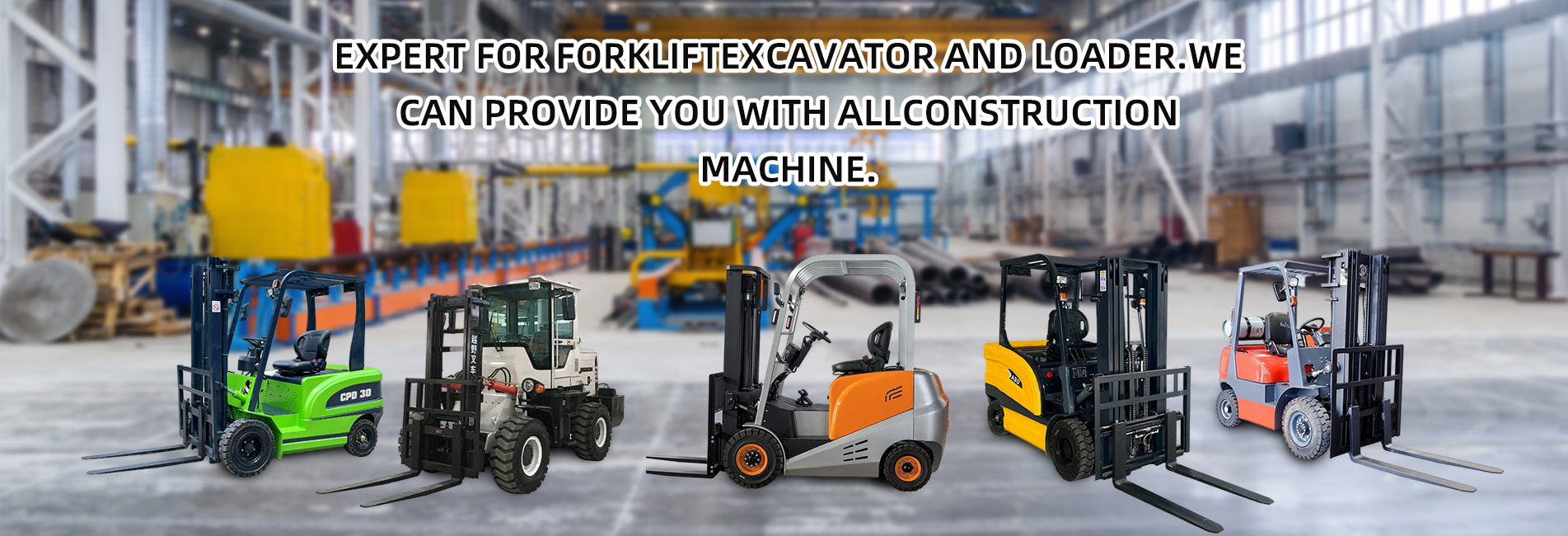
Cost Composition of Customized Electric Forklifts
The cost of customized electric forklifts consists of five core modules: basic model cost, custom development cost, core component upgrade cost, certification and testing cost, and production and logistics cost. Different customization depths correspond to significant differences in cost proportions, with detailed breakdowns as follows:
I. Basic Model Cost (Core Base, Accounting for 40%–60%)
This is the benchmark cost for customization, based on the ex-factory price of standard electric forklifts of the same tonnage, including:
- Standard chassis and frame: Costs of basic structural components for counterbalanced, reach, and stacker forklifts.
- Standard power system: Standard configuration costs of lead-acid batteries (or basic lithium batteries), motors, and controllers.
- Standard operating components: Basic configuration costs of overhead guards, control levers, seats/standing platforms.
Influencing factors: The higher the tonnage, the higher the basic cost; the basic cost of international brands is 30%–50% higher than that of domestic brands.
II. Custom Development Cost (Differentiation Core, Accounting for 10%–40%)
Divided by customization depth, this is the main incremental item of customization cost:
| Customization Depth | Composition of Development Cost | Cost Increase Range |
|---|
Light customization (standard fine-tuning) | Fork lengthening/shortening, mast height adjustment, attachment installation (side shifters/clamps) | 10%–30% of the basic cost |
Moderate customization (module reorganization) | Wheelbase/track adjustment, three-stage mast modification, explosion-proof motor/battery compartment refitting | 30%–60% of the basic cost |
In-depth customization (full-scale development) | Frame redesign, mold development fees, finite element analysis and structural simulation fees, prototype trial-manufacturing fees | 80%–200% of the basic cost |
Key notes: The mold development fee for in-depth customization is a one-time cost; it can be allocated to individual units when the batch size is ≥ 10 units, reducing the unit cost.
III. Core Component Upgrade Cost (Performance Increment, Accounting for 15%–30%)
Costs of components that need to be upgraded for customized scenarios are calculated separately:
- Battery system upgrade: Low-temperature lithium batteries (20%–30% more expensive than standard lithium batteries), high-capacity batteries (50% longer endurance with 40% cost increase), battery insulation compartments (suitable for environments below -20℃ with 10%–15% cost increase).
- Custom attachment cost: Non-standard attachments such as special clamps, rotators, and push-pull devices cost 50%–100% more than standard attachments.
- Travel and braking upgrade: Anti-skid tires, reinforced braking systems, and off-road chassis result in a 15%–25% cost increase.
IV. Certification and Testing Cost (Compliance Requirement, Accounting for 5%–15%)
For customization needs in special scenarios, additional certification and testing fees are required:
- Explosion-proof certification: Ex II BT4/CT4 explosion-proof rating certification, with a 5%–10% increase in unit-allocated cost (the larger the batch size, the lower the allocation).
- Food-grade certification: Inspection and certification fees for stainless steel materials and IP67 waterproof sealing, resulting in a 3%–8% cost increase.
- Custom performance testing: Load center distance expansion testing, stability rollover testing, low-temperature endurance testing. The one-time testing fee is approximately 5,000–20,000 yuan, which is included in the customization cost.
V. Production and Logistics Cost (Implementation Guarantee, Accounting for 5%–10%)
- Small-batch production premium: For small-batch customization of 1–5 units, manufacturers will charge a 10%–20% production premium (due to low production scheduling priority and high process adjustment costs); the premium can be waived when the batch size is ≥ 10 units.
- Logistics and installation commissioning: Special transportation fees for non-standard size forklifts (oversized/overlength requires dedicated vehicles) and on-site installation commissioning fees (including site adaptation testing), accounting for 3%–5% of the unit cost.
VI. Key Suggestions for Cost Control
- 1.Prioritize light customization solutions based on standard model fine-tuning to avoid high mold and design fees from in-depth development.
- 2.For batch customization, agree with manufacturers on the allocation terms of one-time development fees to reduce unit cost.
- 3.Clarify the spare part prices of customized components in the contract to avoid excessive after-sales costs in the later stage.