
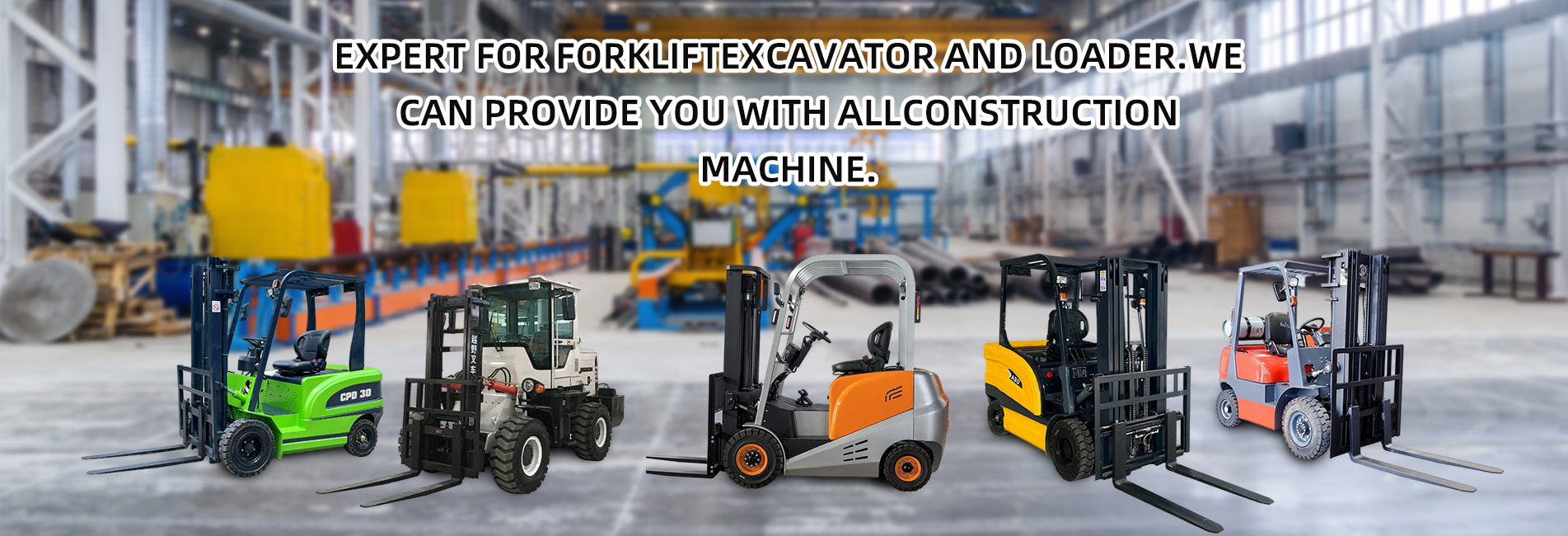
Technical Document: Customization of Electric Forklift Dimensions
The dimensions of electric forklifts can be customized. Mainstream manufacturers offer full-process services ranging from light customization (minor adjustments based on standard models) to in-depth non-standard customization (brand-new structural design). The core objective is to adapt the equipment to the site conditions, load requirements, and operational scenarios, which requires a comprehensive evaluation of technical feasibility, costs, and delivery lead times.
I. Core Customizable Dimension Categories
Dimension Category | Customization Range | Typical Application Scenarios | Technical Boundaries |
|---|---|---|---|
| Fork System | Length: 600–3000 mm; Width: 680–1200 mm; Thickness: 30–80 mm; Customization of adjustable-width forks, rotating forks, and narrow forks | Narrow aisles, long material handling, heavy-duty pallet operations | Must match the load center distance to avoid structural overload |
| Mast Height | Closed height: 1800–2500 mm; Lifting height: 3000–12000 mm; Customization of low masts, triple-stage masts, and telescopic masts | Cold storage with low ceilings, high-level racking systems, container operations | Affects stability and operator visibility; structural strength verification is required |
Overall Length /Width/Height | Width: 800–1500 mm; Length: 2000–4000 mm; Overhead guard height: 1900–2400 mm | Low-clearance workshops, ultra-narrow aisles, special passageways | Restricted by chassis, battery, and steering mechanism; cannot be adjusted indefinitely |
Wheelbase and Track Width | Wheelbase adjustment: ±100–300 mm; Track width adjustment: ±50–200 mm | Off-road operating conditions, turning radius optimization | Directly impacts stability and passability; requires recalibration |
Stacking/ Operational Dimensions | Outer turning radius, aisle width, minimum ground clearance: 50–200 mm | Automated warehouses, AGV docking, uneven ground sites | Must be designed in conjunction with operational processes and rack spacing |
II. Customization Modes and Processes
Light Customization (Minor Adjustments to Standard Models)
In-depth Non-standard Customization (Brand-new Development)
III. Key Customization Constraints and Precautions
Technical Constraints
All customizations must comply with GB/T 5141–2021 Safety Code for Industrial Vehicles. Core components (motor, controller, battery) must maintain compatibility to prevent negative impacts on stability or safety performance caused by modifications.
Costs and Delivery Lead Times
Light customization offers a high cost-performance ratio. In-depth customization requires bearing engineering development and mold costs, leading to significantly extended delivery lead times; the larger the batch size, the lower the unit cost.