
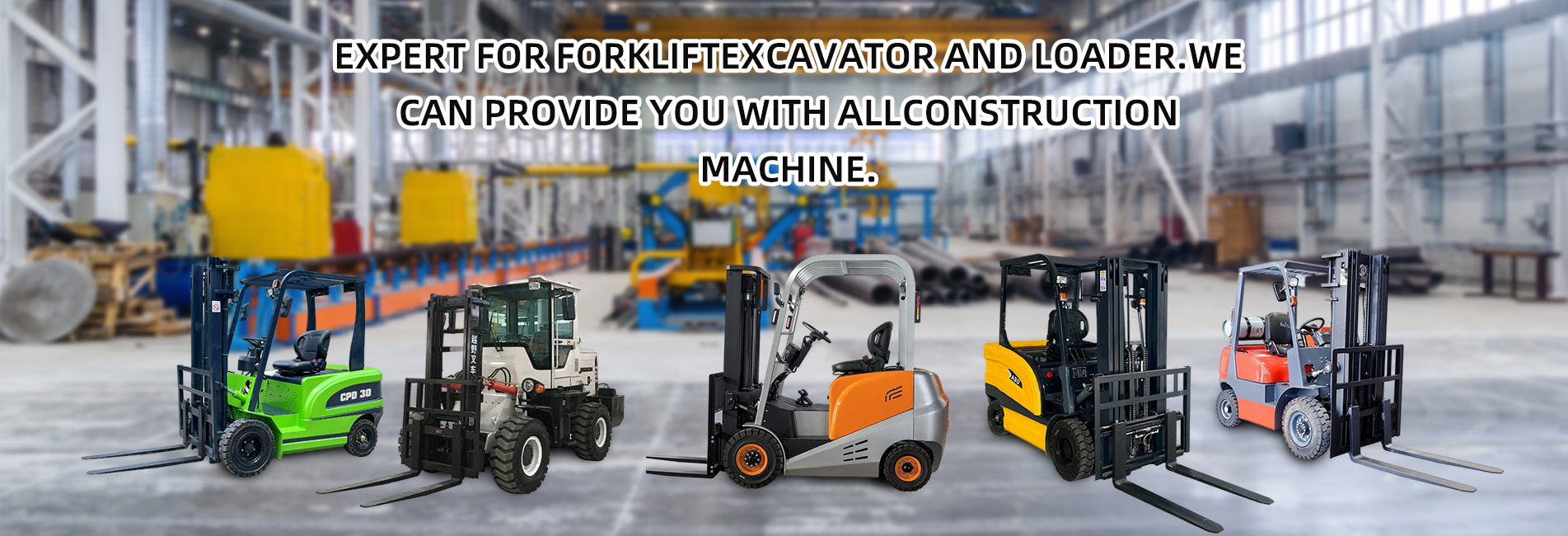
Standardized Pre-inspection Process for Electric Forklifts in Winter
The core objective of winter pre-inspection for electric forklifts is to eliminate potential hazards such as component stiffening, performance degradation, and safety device failure caused by low temperat ures. The inspection must follow the three-step process of Specialized Inspection → Low-temperature Commissioning → Safety Verification, with quantitative standards and responsibility assignments fully implemented. The specific operational specifications are as follows:1. Responsible Entities and Execution Frequency
Execution Entities: Forklift operators are responsible for daily basic pre-inspection, while equipment aintenance technicians conduct weekly in-depth re-inspection.Execution Frequency: The pre-inspection is mandatory before daily startup, with each inspection lasting no less than 15 minutes. An additioal midday re-inspection is required under extreme low temperatures (≤-10℃).2. Specialized Inspection of Core Components (Quantitative Standards + Operational Procedures)
Inspect items in the priority order of Tires → Brakes → Battery → Hydraulics. Fill out the Winter Forklift Pre-inspection Record Sheet, and immediately shut down the equipment for repair if any abnormalities are detected.2.1 Tire System
Quantitative Safety Standards:
1.Tire pressure: 2.5–3.0 bar for front tires and 2.3–2.8 bar for rear tires;
2.Tread depth ≥ 3 mm;
3.No cracks or bulges on the tread, and no cuts on the tire sidewalls.
Step-by-Step Operational Procedures:
1.Measure the actual tire pressure with a high-precision tire pressure gauge. If the pressure is 10% below the standard under low temperatures, replenish nitrogen to avoid thermal expansion and contraction.
2.Measure the tread depth with a tread depth gauge, and clear snow, ice, and gravel from the trea d grooves.
3.Visually inspect for leaks at the junction of the tire sidewalls and wheel hubs.
Judgment and Disposal Measures:
1.If the tire pressure fails to meet the standards, re-test after inflation; if the abnormality persists, r eplace the valve core.
2.If the tread depth is less than 3 mm or there are bulges, cease use immediately andreplace the tres.
2.2 Brake System
Quantitative Safety Standards:
1.Brake pedal travel: 15–25 mm;
2.Brake fluid level between the MAX and MIN scales, with no leakage;
3.The parking brake can stably hold the forklift (no sliding on a ≥15° ramp);
4.Brake fluid freezing point ≤ -40℃ (winter-specialized type).
Step-by-Step Operational Procedures:
1.Press the brake pedal 3 times in neutral gear to check the travel distance and feedback force. If the travel exceeds the standard range, adjust the pushrod clearance.
2.Inspect the brake pipelines and joints for aging, cracking, or leakage traces.
3.Drive to a 15° ramp to test the parking brake; shift to neutral and release the handbrake to observe if the forklift slides.
4.Verify the brake fluid type; replace non-winter-specialized fluid.
Judgment and Disposal Measures:
1.If the pedal travel is abnormal, adjust the clearance; if pipeline leakage occurs, shut down the equipment for maintenance.
2.If the parking brake fails, inspect the brake pads and cables.
2.3 Battery System
Quantitative Safety Standards:
For lead-acid batteries:
1.Electrolyte level 10–15 mm above the plates;
2.No leakage or bulging, and the casing temperature ≥ 0℃;
3.No oxidation at the charging ports.
For lithium batteries:
1.No fault codes displayed on the BMS;
2.Cell temperature ≥ 5℃;
3.No deformation or leakage of the battery pack.
Step-by-Step Operational Procedures:
1. For lead-acid batteries: Open the filler caps to check the electrolyte level; if the level is insufficient, replenish distilled water (electrolyte addition is prohibited); wipe off any leakage on the battery surface and inspect the terminals for corrosion.
2. For lithium batteries: Turn on the power supply to check the BMS display and confirm no over-temperature or over-voltage alarms; touch the battery pack casing to sense the temperature.
3. Activate the battery preheating device under low temperatures; start operation only after preheating to the standard temperature.
Judgment and Disposal Measures:
1.If lead-acid batteries leak or bulge, cease use and arrange for technician disassembly and testing.
2. If a BMS alarm is triggered on lithium batteries, record the fault code and contact the manufacturer's after-sales service.
3. If the temperature fails to meet the standards, extend the preheating time; forced startup is prohibited.
2.4 Hydraulic System
Quantitative Safety Standards:
1.Hydraulic oil level between the scale lines on the dipstick;
2.Hydraulic oil type: ISO VG32 (pour point ≤ -30℃);
3.Tightening torque of pipeline joints ≥ 20 N·m, with no leakage;
4.The lifting function can only be activated when the oil temperature ≥ 10℃.
Step-by-Step Operational Procedures:
1.Visually inspect the hydraulic oil tank level; if insufficient, replenish winter-specialized hydraulic oil.
2.Re-check the tightness of the pipeline joints with a torque wrench and identify leakage points.
3.Touch the hydraulic pipelines to sense the oil temperature; idle the forklift for preheating under low temperatures.
Judgment and Disposal Measures:
1.If the oil type does not match, replace all the oil; if the oil level is insufficient, replenish the oil.
2.If pipeline leakage occurs, tighten the joints or replace the seals.
3. Low-temperature Adaptability Commissioning (Preheating + Functional Testing)
Low winter temperatures can increase hydraulic oil viscosity and reduce battery activity. Preheating and functional testing must be completed before operation.3.1 Preheating Trial Run Procedures
Start the forklift, shift to neutral gear and idle for 10–15 minutes (5 minutes at room temperature); turn on the heating system to assist hydraulic oil temperature rise. Monitor the hydraulic oil temperature and battery temperature in real time; proceed to functional testing only when the hydraulic oil temperature ≥ 15℃ and the battery temperature ≥ 5℃.3.2 Core Functional Testing
Steering Function: Turn the steering wheel fully left and right 3 times each; the steering should be smooth without jamming, and there should be no abnormal increase in steering clearance.Lifting/Tilting Function: Lift the forks to the maximum height, then lower them to 10–15 cm above the ground, and repeat 3 times; operate the tilting handle to test forward/backward tilting movements, which should be stable without shaking.Traveling Function: Drive at low speed for 5 meters; test the smoothness of forward/reverse gear shifting, with no impact or abnormal noise.4. Mandatory Safety Device Verification
Safety devices are the final line of defense for winter operations, and their normal functionality must be 100% confirmed.4.1 Protective Devices
Safety Belt: Conduct a tensile test on the buckle firmness; the belt should stretch without jamming, with a breaking strength ≥ 22 kN. replace immediately if damaged.Overhead Guard: Visually inspect for deformation or weld cracking; ensure no looseness.4.2 Warning Devices
Reverse Alarm: Sound volume ≥ 85 dB; test if it is automatically activated when reversing.Headlights/Turn Signals: High beam irradiation distance ≥ 30 m, low beam ≥ 15 m. replace bulbs immediately if lights are dim.4.3 Limiting Devices
Lifting Height Limiter: Test if it automatically stops when the forks reach the rated height, with an error ≤ 50 mm.Emergency Stop Button: Must immediately cut off the power supply when pressed; the forklift should start normally after resetting.5. Pre-inspection Result Disposal Rules
Qualification Standard: Only when all inspection items meet the standards and functional tests show no abnormalities can the pre-inspection sheet be signed and operation started.Abnormality Disposal: For minor abnormalities (e.g., slightly low tire pressure, dim lights), operators shall rectify on-site and re-test; operation is allowed only after meeting the standards. For severe abnormalities (e.g., brake failure, battery leakage, hydraulic leakage), immediately post a "No Operation" sign, report to the equipment management department, and arrange for technician maintenance. Operation with faults is strictly prohibited.6. Risk Warnings
1.Forcing the operation of lifting or steering functions without sufficient preheating may cause hydraulic pump damage or motor overload.
2.Deep discharge of lithium batteries is strictly prohibited in winter (remaining power ≥ 20%), otherwise irreversible capacity loss will occur.
3.Open flame heating of batteries or hydraulic oil tanks during pre-inspection is prohibited to prevent explosion risks.