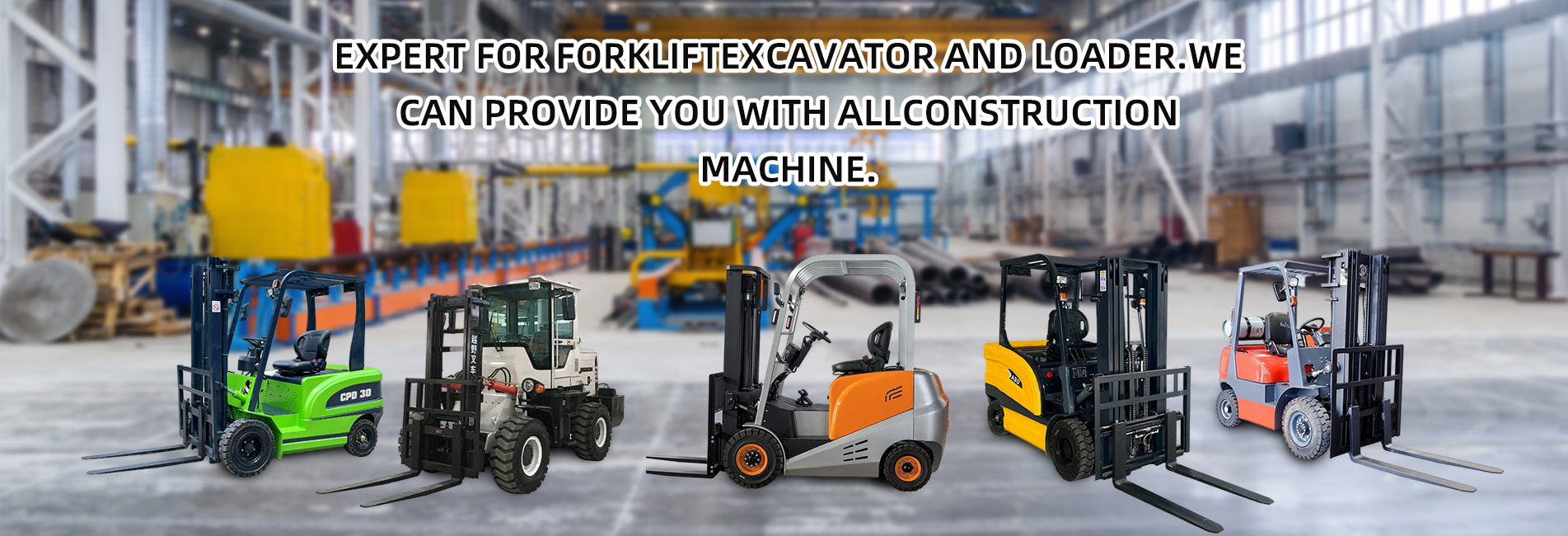
Comprehensive Technical System of Chinese Electric Forklifts (Latest update 2026)
Leveraging a complete global lithium battery industrial chain, Chinese electric forklifts have achieved a technological leapfrog. Full independent R&D has been realized for core three-electric systems, vehicle hydraulics, intelligent driving and multi-energy solutions. China boasts the world’s highest lithium battery penetration rate for forklifts. Mid-to-low-end models are fully comparable to Japanese and European counterparts, while unique technical strengths have been forged in high-voltage heavy-duty equipment, unmanned vehicle fleets and hydrogen fuel cells.I. Core Three-Electric Systems (The Core Domestic Technical Barrier with 95% Localized Components)
1. Power Battery Technology (World-Leading)
Lithium iron phosphate (LFP) serves as the mainstream domestic battery chemistry; ternary lithium batteries are rarely adopted due to safety risks. Three mature technical solutions have been developed:Standard Lithium Battery Packs
- Cycle life exceeding 6,000 times; active balancing via BMS with single-cell voltage difference less than 5mV and SOC estimation accuracy within ±2%.
- 98% charging efficiency, supporting 1-hour fast charging and 80% state-of-charge replenishment within 30 minutes, compatible with two-shift and three-shift non-stop operations.
- Dual closed-loop liquid cooling thermal management delivers stable output from -30°C to 60°C, solving the pain point of power attenuation under frigid northern conditions (core technology of Hangcha and BYD).
High-Voltage Platform Technology (Cutting-Edge Industry Solution)
Mass-produced 80V/96V/600V high-voltage heavy-duty forklifts cover the full product range from 2 tons to 48 tons. For equivalent capacity, vehicle weight is reduced by 15%, electric drive efficiency improved by 12%–18%, and energy recovery via regenerative braking cut power consumption by 30%.Battery Swapping Technology
XCMG, Heli and BYD have popularized 3-minute rapid battery swapping, eliminating charging waiting time. Large industrial parks are equipped with vehicle-to-grid (V2G) bidirectional charging and discharging systems, cutting park peak-valley power costs by over 25%.Forward-looking R&D routes: Sodium-ion batteries and semi-solid batteries have been deployed in small-batch vehicle trials with energy density breaking 220Wh/kg. A closed-loop system for cascade utilization of retired power batteries has been fully implemented.2. Drive Motor Technology
85% of mid-to-high-end forklifts are factory-fitted with Permanent Magnet Synchronous Motors (PMSM), replacing outdated asynchronous motors. The motors deliver millisecond-level torque response, support climbing gradients above 25° under full load, and achieve overall vehicle energy efficiency of 93%–95%.- Highly integrated 8-in-1 powertrain: Integrated travel motor, lift motor, steering motor and multi-functional controller, cutting pipeline layout and drastically lowering failure rates.
- Dual-motor coupled drive for heavy-duty models enables smooth startup and anti-slip performance for large-tonnage forklifts, with torque control error below 3% and active anti-tipover protection.
3. Vehicle Electronic Control Unit (Deep Coordination of VCU and BMS, Breakthroughs in Domestic Algorithms)
FOC Vector Control + SiC Silicon Carbide Electronic Control
New-generation controllers from top manufacturers adopt silicon carbide power devices, delivering over 90% efficiency across all load ranges with superior heat dissipation and lower energy consumption compared with traditional IGBTs.Multi-Algorithm Integrated Battery Management
Extended Kalman filtering combined with neural network SOC calibration addresses inaccurate power estimation under forklifts’ frequent high-current pulse operating conditions. Model Predictive Control (MPC) for the whole vehicle pre-allocates energy for travel and lifting operations, boosting comprehensive driving range by 13.7%.Full-Range Energy Recovery
Electric energy is simultaneously recovered during downhill travel, braking and mast lowering, reducing power consumption by 12%–18% under no-load conditions — a landmark energy-saving technology for domestic forklifts.Underlying safety protection logic: Multi-layer safeguards including overcurrent protection, overtemperature protection, high-voltage interlock, tilt speed limiting and power cutoff upon driver seat departure.II. Vehicle Hydraulics and Lightweight Structural Technology
1. Electronically Controlled Energy-Saving Hydraulic System (Unique Domestic Optimization)
Standard electronic variable displacement piston pumps automatically reduce power under no-load conditions, eliminating the high energy consumption flaw of traditional fixed-displacement pumps.- Decoupled electro-hydraulic composite braking technology: Coordinated hydraulic braking and motor regenerative braking deliver smooth braking and reduce brake pad wear.
- Mature domestic alternatives for multi-way valves feature response speeds matching imported products, enabling precise synchronous control of lifting, side shifting and fork spacing adjustment.
2. Lightweight High-Strength Manufacturing for Frames and Masts
Box-type double-beam frames and thickened mast extrusions are fully robot-welded, boosting torsional and bending strength by 30% with a superior self-weight-to-load ratio versus imported equipment.- Modular platform design shares a unified chassis architecture for 2–10 ton models, shortening new product development cycles to only 45 days (compared with roughly 90 days for overseas brands).
- Full-body IP67 waterproof and dustproof protection adapts the equipment to harsh scenarios including ports, cold storage facilities and chemical dust workshops.
III. Parallel Multi-Energy Technical Routes (Dual Main Lines: Lithium Batteries + Hydrogen Fuel Cells)
1. Lithium Batteries as the Mainstream (Over 80% Market Penetration, the Highest Globally)
Domestic manufacturers cover the full spectrum from 1-ton warehouse trucks to 48-ton heavy counterbalance forklifts, with comprehensive advantages over overseas products in cost, supply chain and maintenance. Units of identical specifications are priced 20%–30% lower than European and American equivalents and 15%–20% lower than Japanese models.2. Hydrogen Fuel Cell Forklifts (Large-Scale Mass Production Realized Domestically)
Hangcha, Heli, Taiyuan Heavy Industry and Weichai have achieved mass production of a full lineup of 2–10 ton hydrogen forklifts and led the formulation of national industrial standards for hydrogen fuel cell forklifts.Core performance indicators: 3-minute hydrogen refueling, 10 consecutive hours of operation, reliable cold startup at -30°C, and zero emissions aside from water vapor.Heavy-duty innovation: The world’s first swappable-hydrogen 10-ton forklift has been launched, with hydrogen storage modules replaceable within 3 minutes for a 12-hour operating range, suited to 24-hour production in steel mills and ports.Breakthroughs over technical bottlenecks: Fuel cell thermal management, dynamic pressure relief for high-pressure hydrogen storage, and stable power supply under vibration conditions.IV. Intelligent and Unmanned Forklift Technology (Fastest Global Commercialization for Domestic Products)
1. On-Board Intelligent Safety (Standard Equipment for Manned Forklifts)
- 360° millimeter-wave radar and vision fusion anti-collision system triggers automatic deceleration and braking upon pedestrian detection.
- Real-time load weight monitoring, overload restriction and tilt angle early warning; facial recognition startup, tire pressure monitoring and remote fault diagnosis.
- Vehicle IoT platform: Cloud-based monitoring of power level, energy consumption, malfunctions and operating hours to realize digital fleet management.
2. Automated Unmanned Forklifts (AGV/AMR, A Core Competitive Track for Domestic Manufacturers)
Full coverage of navigation solutions: Laser SLAM, QR code, magnetic tape and vision-based trackless navigation requiring no warehouse reconstruction.Multi-vehicle fleet dispatching powered by 5G and industrial internet: Dozens of unmanned forklifts operate in coordination with automatic collision avoidance and intelligent task allocation.Autonomous operational functions: Automated pallet picking and placing, high-bay stacking, automatic charging/battery swapping, and docking with production lines for inbound and outbound logistics.Leading commercialization scale: Unmanned forklift penetration exceeds 15% in domestic smart factories and e-commerce warehouses, versus merely 5%–8% in equivalent overseas industries.V. Industrial Chain and Localization Level
95% Localization Rate of Core Components
All core parts including battery cells (CATL, BYD), motors, vehicle controllers, hydraulic valves and frames are domestically manufactured. Only high-precision premium sensors and a small portion of high-end IGBTs are imported, breaking reliance on foreign component supply chains.Complete industrial clusters: A 50-kilometer supporting supply circle spanning the Yangtze River Delta and East China delivers far faster delivery and customized iteration than European, American and Japanese manufacturers.Manufacturing processes: Fully automatic stamping, robotic welding and intelligent coating production lines achieve an overall finished product yield above 95.5%, supporting rapid customized modular production.VI. Technical Gap Between Domestic and Overseas Brands
Advantages of Domestic Brands (Technological Overtaking Achieved)
- Leading lithium battery full industrial chain with superior battery cost, fast charging, battery swapping and V2G technologies.
- World-leading speed of commercialization for intelligent systems, unmanned fleets and cloud fleet management.
- Exclusive innovations in large-tonnage hydrogen forklifts and swappable hydrogen solutions.
- Remarkable strengths in cost control, customization, delivery lead times and after-sales maintenance systems.
Remaining Gaps (High-End Segments)
European, American and Japanese brands hold marginal advantages in high-end chassis dynamics, micro-control of precision hydraulic valves and durability of long-life sealing components.Ultra-high-precision premium safety sensors and automotive-grade high-end chips still rely on imports.European and American brands feature higher overall vehicle modular versatility and broader global compatibility of spare parts.VII. Future Technical Development Directions
- Popularization of high-voltage platforms: 600V high-voltage architectures will be rolled out for mainstream 3–5 ton forklifts to further reduce weight, boost travel speed and cut energy consumption.
- Commercialization of solid-state and sodium-ion batteries: replace traditional lithium iron phosphate cells with low-temperature resistant, high-safety and low-cost alternatives.
- AI adaptive vehicle control: Self-learning energy consumption optimization strategies based on operating habits, load weight and road gradients.
- Full-scenario unmanned operation: Mass deployment of driverless electric rough-terrain forklifts for outdoor ports and construction sites.
- Lightweight and low-cost hydrogen energy: Reduce fuel cell system costs to expand adoption in small and medium warehouse forklifts.
- Green closed-loop ecosystem: Standardized unified recycling and cascade utilization of power batteries.
Conclusion
Chinese electric forklifts have evolved from the early stage of "imitative catch-up" to a phase of parallel global leadership across three technical routes: lithium battery power, intelligent automation and hydrogen energy. Domestic lithium forklifts for small and medium tonnages have comprehensively outperformed imported counterparts, with proprietary patent barriers built in high-voltage heavy-duty equipment, unmanned handling and hydrogen fuel cells. A fully self-reliant industrial chain supports large-scale overseas exports, making electric forklifts one of the few domestic construction machinery sub-sectors with globally leading technology.