
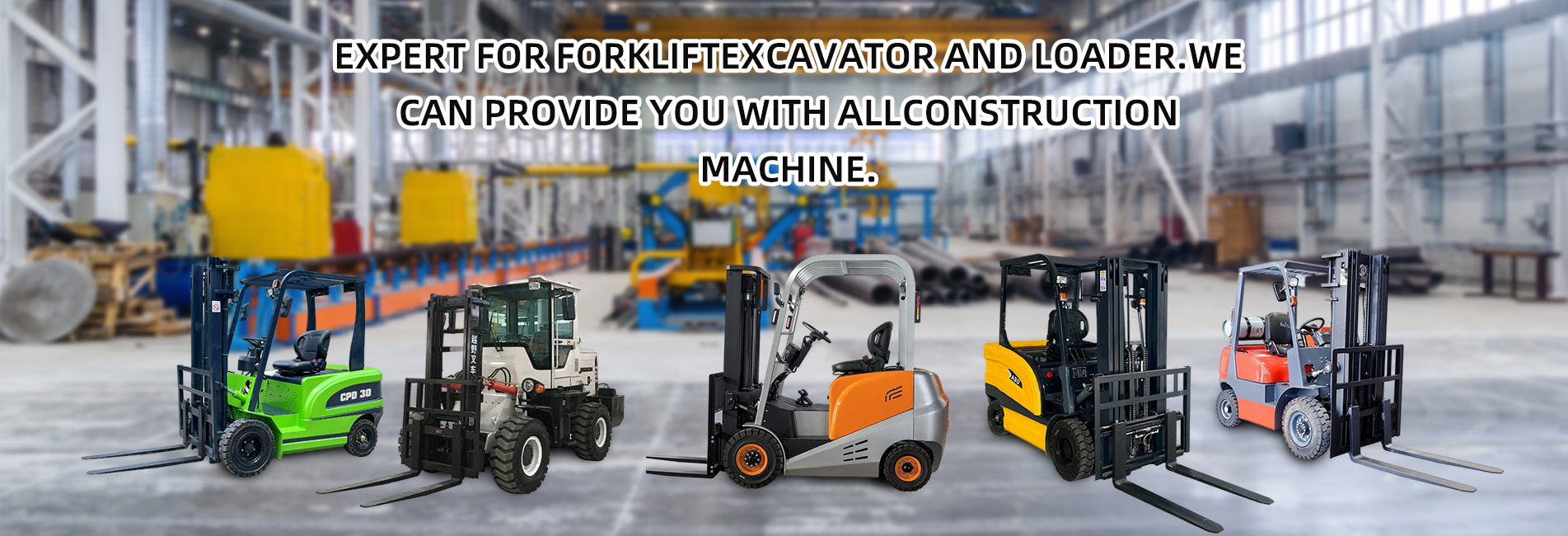
The 3-ton electric forklift is the most mainstream counterbalance electric forklift in industrial logistics, covering more than 80% of medium-to-heavy duty indoor and outdoor handling scenarios, and serves as the main model for electrification replacement. This document provides a comprehensive analysis covering core parameters, powertrain configuration, performance, pricing, selection and application.
I. Core Basic Parameters (Industry General Standards)
- Rated load capacity: 3000 kg (load center distance: 500 mm)
- Total weight: 4.6–5.0 t (including battery)
- Minimum turning radius: 2.3–2.4 m
- Gradeability at full load: 15%–20%
- Standard lifting height: 3.0 m (optional: 3.5 / 4.0 / 4.5 / 5.0 / 6.0 m)
- Mast tilt angle: forward tilt 6° / backward tilt 12°
- Travel speed (full load): 16–20 km/h
- Lifting speed (full load): 350–440 mm/s
II. Core Powertrain System (Determines Performance and Cost)
1. Power Battery (Two Main Routes)
Lead-acid battery (conventional)
- Voltage: 48V / 72V, capacity: 400–600 Ah
- Endurance: 6–8 hours
- Charging: 6–10 hours (slow charge)
- Lifespan: 1000–1500 cycles
- Cost: Low upfront price, high maintenance cost
Lithium battery (mainstream trend)
- Voltage: 72V / 80V / 96V (high-voltage platform)
- Capacity: 200–400 Ah (LiFePO4)
- Endurance: 8–12 hours
- Charging: 1-hour fast charge to 80%, battery swap supported
- Lifespan: 3000–4000 cycles
- Advantages: Maintenance-free, high energy density, good low-temperature performance
2. Drive Motor
- Permanent magnet synchronous motor (standard): Efficiency ≥90%, high torque at low speed, standard energy recovery
- Power: 15–30 kW (over 30 kW for high-voltage platforms)
- Drive type: Rear-wheel drive (counterbalance)
3. Electronic Control System
- Controller: AC vector control (FOC)
- Functions: Smooth speed regulation, inching control, hill-hold, energy recovery, fault diagnosis
- Protection rating: IP65–IP67
III. Key Performance and Technical Features
- High-voltage platform (96V): Stronger power, lower energy consumption, faster charging; standard on high-end models
- Water cooling: Water-cooled powertrain ensures stable performance under continuous heavy load, with efficiency increased by over 15%
- Electric hydraulic system: Load-sensing and on-demand oil supply, saving over 30% energy
- EPS electric steering: Light and precise, reducing operator fatigue
- Safety features: Load-sensing speed limit, mast anti-settling, emergency reverse, seat sensor, emergency stop power cut-off
- Intelligence: Remote monitoring, fault pre-alarm, data statistics
IV. Price Range (2026 Market)
- Entry-level (lead-acid / basic lithium battery): ¥80,000–150,000
- Mid-range (mainstream lithium battery): ¥150,000–250,000 (market mainstream)
- High-end (high-voltage / water cooling / intelligent): ¥250,000–400,000
Influencing factors: Battery type (lithium > lead-acid), voltage platform, lifting height, attachments (side shifter / rotator / paper roll clamp), brand
V. Typical Application Scenarios
- Logistics & warehousing: E-commerce / third-party logistics, cold storage, automated warehouse (zero emission, low noise)
- Manufacturing: Automotive, electronics, machinery, food & pharmaceuticals (clean indoor operation)
- Retail & supermarkets: Distribution centers, store replenishment
- Special scenarios: Cold chain (-20℃ cold-resistant battery), paper industry (paper roll clamp), explosion-proof workshops (explosion-proof certified)
VI. Core Selection Points
Battery Selection
- 8-hour single shift: Lithium battery recommended (fast charge / maintenance-free)
- Limited budget / multi-shift operation: Lead-acid battery + spare battery
Voltage Platform
- Heavy load / long endurance: Prioritize 96V high voltage (strong power, low energy consumption)
Lifting Height
- Standard warehouse: 3.0 m
- Automated warehouse: 4.5–6.0 m
Attachments
- Essential: Side shifter (improves operational efficiency)
- Optional: Rotator, paper roll clamp, push-pull attachment
VII. Comparison with 3-Ton Internal Combustion Forklift (Core Differences)
| Item | 3-Ton Electric Forklift | 3-Ton IC Forklift |
|---|---|---|
| Emission | Zero emission | Exhaust pollution |
| Noise | <65 dB | >80 dB |
| Energy cost | Low (50–70% lower) | High |
| Maintenance cost | Low (over 60% lower) | High |
| Endurance | Lithium battery: 8–12 h | Full tank: 8–10 h |
| Charging / refueling | 1-hour fast charge (lithium) | 5 minutes |
| Environment | Indoor & outdoor, clean operation | Mainly outdoor |
| TCO | Payback within 2–3 years | High long-term cost |
VIII. Conclusion
The 3-ton electric forklift is a golden-tonnage model balancing cost performance and capability. Lithium-ion electrification, high-voltage platforms and intelligence represent the mainstream trends. It outperforms internal combustion forklifts in environmental protection, energy consumption, maintenance and working condition adaptability, making it the preferred model for enterprises’ logistics electrification transformation.