
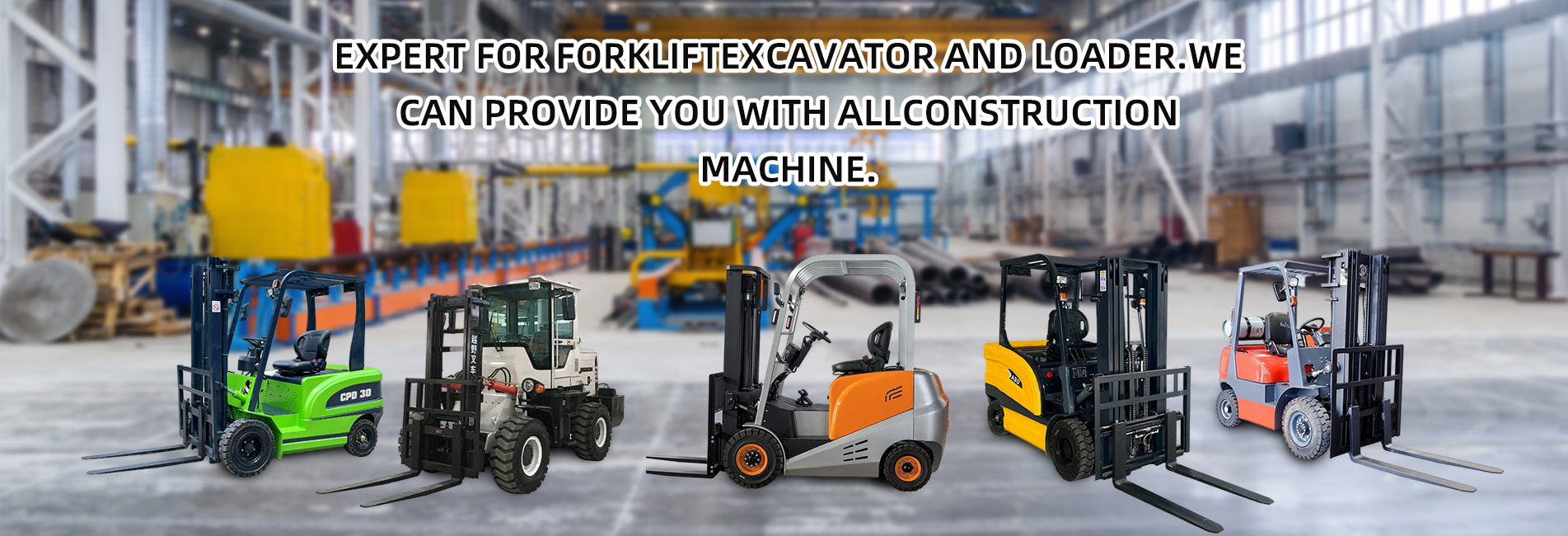
The Asia-Pacific region is the largest and fastest-growing core market for electric forklifts globally, accounting for approximately 47.5% of global sales and about 43%–45% of revenue in 2024. From 2025 to 2030, it will maintain a CAGR of over 5.5%, with the global share expected to rise to 50% by 2030, led by China, with Japan and South Korea focusing on high-end products, and Southeast Asia/India rapidly emerging, forming a pattern of "one leader and multiple growth centers."
1. Market Size and Growth Rate (2025–2030)
- 2024: Asia-Pacific electric forklift sales are expected to be around 1.45–1.5 million units, with a market size of approximately $7.8–8.2 billion.
- 2030: Sales are projected to reach 1.9–2 million units, with the market size exceeding $11 billion, representing a CAGR of about 5.5%–6.0%, which is higher than the global average.
- China: Sales in 2024 are expected to be about 950,000 units (over 63% of Asia-Pacific and 66% of global sales); by 2030, this is expected to rise to 1.3 million units, with a CAGR of about 6.5% and a lithium battery adoption rate increasing from 50% to 80%.
- Southeast Asia/India: Sales in 2024 are expected to be around 250,000–300,000 units; by 2030, this is projected to increase to 450,000–500,000 units, with a CAGR of 7%–9%, making it the fastest-growing segment in the region.
- Japan and South Korea: Sales in 2024 are estimated at around 200,000–220,000 units; by 2030, this is expected to reach 250,000–280,000 units, with a CAGR of 3%–4%, focusing on high-end lithium batteries and automation.
2. Core Driving Factors
- China: A triple engine of policy, supply chain, and exports.
- Carbon neutrality and environmental policies are mandating the replacement of internal combustion forklifts, with electrification rates reaching 72.3% by 2024.
- A complete lithium battery supply chain is driving down costs and improving performance, with lithium iron phosphate rapidly replacing lead-acid batteries.
- High export growth: By 2025, exports are expected to reach about 700,000 units, with accelerated overseas factory setups and local supply chain development.
- Southeast Asia/India: Industrialization, e-commerce, and supply chain shifts.
- The manufacturing and e-commerce sectors are booming, with rapid expansion of warehouse space (India is expected to add 100 million square feet in 2026).
- There is a surge in demand for economical electric forklifts across industries like electronics, automotive, and textiles, driven by global capacity transfers.
- Chinese manufacturers are capturing the market with localized assembly and cost-effective solutions.
- Japan and South Korea: High-end customization, automation, and cold chain demand.
- Advanced precision manufacturing and cold chain logistics prefer lithium battery and automated solutions.
- High labor costs are driving the adoption of AGVs and unmanned forklifts in standardized warehousing.
- Leading trials of solid-state batteries and hydrogen fuel cell forklifts.
3. Regional Structural Evolution (2025–2030)
China: From scale leader to technology exporter.
- Acceleration of lithium battery adoption: By 2025, lithium forklifts will account for 50%, reaching 80% by 2030, fully replacing lead-acid.
- Widespread adoption of unmanned forklifts in flat and high-rise warehouses, with a penetration rate of over 10% by 2030.
- Standardization of battery swapping interfaces, with BaaS/rental penetration increasing from 25% to over 40%.
- Breakthroughs in heavy-duty electric forklifts over 46 tons, replacing internal combustion in ports and mines.
Southeast Asia/India: Rapid growth, with cost-effectiveness as king.
- Electrification rates will rise from 30%–40% to 50%–60%, primarily focusing on 1–3 ton light warehouse forklifts.
- Chinese brands dominate the market through local assembly and low-cost lithium solutions.
- Charging and battery swapping infrastructure is gradually improving, suitable for two-shift operations.
Japan and South Korea: High-end customization and technology leadership.
- Maintaining an electrification rate of over 80%, focusing on lithium batteries, automation, and specialized scenarios (cold chain, explosion-proof, clean rooms).
- Commercial trials of solid-state batteries and hydrogen fuel cell forklifts are expected to account for 3%–5% by 2030.
- Mature rental and Mobility as a Service (MaaS) markets, with a penetration rate of over 60%.
4. Technology and Product Trends
- Lithium batteries will fully replace lead-acid: By 2030, over 70% of electric forklifts in Asia-Pacific will be lithium-powered, with China reaching 80%.
- Unmanned operations will expand from warehousing to all scenarios: After 2028, unmanned forklifts will be scaled in complex environments like chemicals, cold chains, and ports.
- Heavy-duty and outdoor applications: Electric forklifts over 50 tons and off-road models will become widespread, fully replacing internal combustion.
- Battery swapping and ultra-fast charging will become standard: 30-second battery swaps and 30-minute charging to 80% will accommodate multi-shift operations.
- Service transformation: Leasing, BaaS, and MaaS will become mainstream, with rental penetration in China expected to reach over 40% by 2030.
5. Key Challenges
- Southeast Asia/India: Insufficient charging infrastructure, unstable power grids, and high initial investments.
- China: Continued reliance on imports for high-end controllers, sensors, and automotive-grade chips.
- Inconsistent regional standards: Differences in battery swapping interfaces and communication protocols hinder scalability.
6. Key Metrics Overview (2025–2030)
| Region | 2024 Sales (10,000 units) | 2030 Sales (10,000 units) | CAGR | 2030 Lithium Adoption Rate | Core Scenarios |
|---|---|---|---|---|---|
| China | 95 | 130 | 6.5% | 80% | Warehousing, heavy-duty, ports |
Southeast Asia/ India | 25–30 | 45–50 | 7%–9% | 50%–60% | E-commerce, manufacturing |
Japan and South Korea | 20–22 | 25–28 | 3%–4% | 85%+ | Precision manufacturing, cold chain |
| Total Asia-Pacific | 145–150 | 190–200 | 5.5%+ | 70%+ | All scenario coverage |
Conclusion
The Asia-Pacific electric forklift market will continue to lead globally, with China dominating in volume growth and technology exports, while Southeast Asia/India rapidly catches up, and Japan and South Korea lead in high-end products. Key trends include lithium adoption, automation, service transformation, and heavy-duty applications, making Asia-Pacific the absolute center for electric forklift technology, capacity, and market by 2030.