
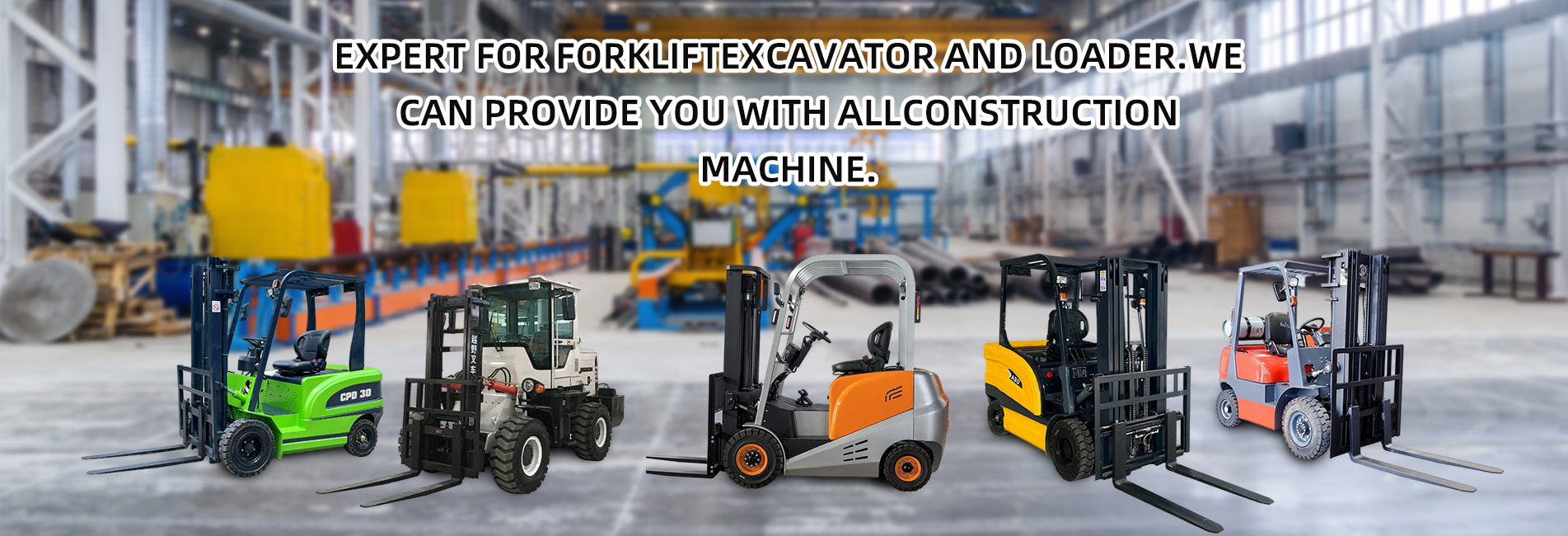
Development Trends in the Regional Distribution of the Global Electric Forklift Market
The global electric forklift market features a pattern where the Asia-Pacific region takes the lead, Europe and North America boast high penetration rates, and emerging markets are accelerating growth. The core trends include deeper electrification, widespread intelligentization, accelerated localization, and service-oriented business models. Divergent growth paths have emerged across regions due to differences in policies, industries, and infrastructure.I. Regional Landscape and Growth Rate: Share Rebalancing and Emerging Markets Catching Up
- Asia-Pacific (APAC): The world’s largest market, accounting for approximately 47.5% of the global share in 2024, with its share projected to rise to around 50% by 2030 and a CAGR of over 5.5%. China dominates the market, making up roughly 66% of global sales. Southeast Asia and India undertake industrial relocation and lead in growth rate.
- Europe: Boasts the highest electrification rate, exceeding 80% in 2024 with steady market expansion, reaching an estimated USD 6.5 billion by 2030 and a CAGR of around 4.5%. Policies drive the deepening of lithium-ion adoption and unmanned forklift applications.
- North America: A benchmark for technology and regulations, accounting for about 25.4% of the global share in 2024 with a CAGR of around 5.3%. Penetration rates of unmanned forklifts and Battery-as-a-Service (BaaS) are rising rapidly.
- Middle East & Africa (MEA) and Latin America: The two fastest-growing segments. MEA records a CAGR of approximately 6.12% (2025–2030), while Latin America reaches around 10.72%, driven mainly by diesel forklift replacement, infrastructure construction, and mining demand.
II. Core Trends: Regional Evolution Paths
1. Asia-Pacific: From Scale to Quality, with China Leading Global Exports
- China: Accelerating lithium-ion electrification (around 50% in 2025 and 80% in 2030), with large-scale deployment of battery swap models and unmanned forklifts. Exports maintain growth, reaching an estimated 700,000 units in 2025. Overseas manufacturing (in Thailand and Europe) is accelerating, and supply chain localization reduces costs.
- Southeast Asia / India: Driven by manufacturing and e-commerce expansion, demand for cost-effective electric forklifts is strong. Chinese manufacturers seize market share through localized assembly, catering to warehousing and electronics manufacturing scenarios.
2. Europe: Strong Policy-Driven, High-End and Full-Scenario Customization
- Rigid Regulations: EU battery regulations and zero-carbon park requirements push the electrification rate above 90%, accelerating lithium-ion replacement of lead-acid batteries. Lithium-ion forklifts will account for around 45% of the market in 2025–2026.
- Technological Upgrading: Unmanned forklifts are widely applied in high-risk scenarios such as chemical and cold chain industries. Integrated photovoltaic-energy storage-charging-battery swap stations gain popularity, and a full life cycle recycling system matures.
3. North America: Dual Drivers of Technological Innovation and Service Orientation
- Regulations and Costs: California’s zero-emission regulations and labor shortages drive the electrification rate to around 70%. BaaS and operating leases become mainstream, reducing initial investment.
- Digital Penetration: Widespread telematics adoption enables fleet management with battery health monitoring and predictive maintenance. Large-tonnage and explosion-proof electric forklifts replace internal combustion models, boosting demand in ports and manufacturing.
4. Middle East & Africa, Latin America: Infrastructure and Industrial Replacement Driving Rapid Volume Growth
- Middle East: Driven by ports, logistics hubs, and mining projects, demand for electric forklifts specialized in highly corrosive and heavy-duty scenarios is rising. Chinese and South Korean manufacturers capture markets through localized assembly.
- Latin America: Industrial recovery and replacement of aging diesel forklifts drive a rapid increase in the electrification rate to 30–40%. Brazil and Mexico are core markets, serving warehousing and automotive manufacturing scenarios.
III. Common Trends: Global Evolution of Technology and Business Models
- Technological Standardization: Battery swap interfaces and battery pack standards are gradually unified. 30-second battery swaps and ultra-fast charging become standard features, eliminating range anxiety.
- Large-Scale Intelligentization: Unmanned forklifts expand from standardized warehousing (flat warehouses, automated warehouses) to non-standardized scenarios (chemical, cold chain), reaching an industrial inflection point after 2028.
- Supply Chain Localization: Leading manufacturers (Chinese and European) accelerate overseas capacity deployment to reduce tariffs and delivery cycles, adapting to regional working conditions.
- Service-Oriented Business Models: Shifting from "selling equipment" to leasing, BaaS, and Maintenance-as-a-Service (MaaS). The leasing penetration rate in Europe reaches approximately 75%, while China rapidly rises to over 25%.
IV. Quick Overview of Key Indicators (2025–2030)
| Dimension | Asia-Pacific | Europe | North America | Emerging Markets (MEA / Latin America) |
|---|---|---|---|---|
| Core Drivers | Capacity expansion, exports | Regulations, lithium-ion electrification | Automation, BaaS | Infrastructure, diesel replacement |
| Electrification Rate | 60–75% | >80%→90% | 65–70% | 25–45% |
| Lithium-Ion Electrification Rate | 50%→80% | 45%→60% | 40%→55% | 15%→30% |
| CAGR (2025–2030) | 5.5%+ | 4.5% | 5.3% | 6–11% |
| Key Scenarios | Warehousing, heavy-duty | High-risk, cold chain | E-commerce, 3PL | Mining, ports |
Trend Summary
Over the next five years, the Asia-Pacific region will continue to lead in sales volume and technology exports. Europe and North America will complete the deployment of high-end electrification and unmanned applications. Emerging markets will achieve leapfrog growth through replacement and incremental demand. Core variables include breakthroughs in battery technology, unification of regional standards, and maturity of service ecosystems, which will further promote electric forklifts as core infrastructure for global industrial logistics.