
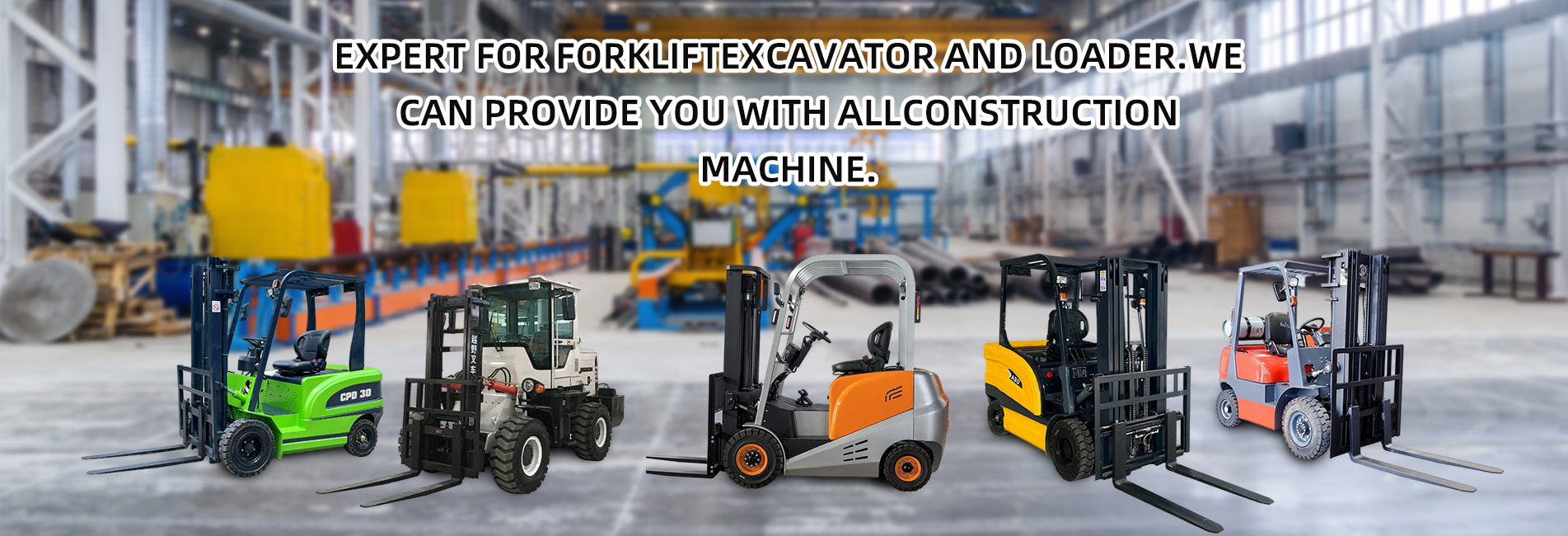
Daily Maintenance of Forklift Stability
Daily maintenance of forklift stability is by no means a "routine chore"; instead, it serves as a core line of defense for safeguarding personnel safety, ensuring equipment integrity, maintaining operational compliance, controlling costs, and stabilizing efficiency. Its importance is reflected in the following six core dimensions, each with clear cause-and-effect logic and practical implementation value.I. Ensuring Personnel and On-site Safety (Core Value)
Preventing Overturning Accidents
Forklift overturning is the most fatal type of accident. Daily inspections (covering tires, counterweights, masts, and braking systems) can identify potential hazards such as center-of-gravity shifts and component failures in advance. This prevents rollovers during heavy-load operations, ramp travel, or sharp turns, thereby protecting the lives of operators and surrounding personnel.Preventing Cargo Falling/Damage
Insufficient stability can cause mast shaking, cargo swaying, and side tilting, which in turn lead to cargo falling. This not only results in cargo losses but also risks injuring personnel and damaging nearby equipment.Reducing Operational Risks
Daily maintenance of steering, braking, and hydraulic systems prevents sudden malfunctions during operations (e.g., steering jamming, brake failure, mast drifting). Especially in high-risk scenarios such as narrow aisles, high-level stacking, and slippery ground, stability maintenance is a prerequisite for safe operations.II. Extending Equipment Service Life and Reducing Lifecycle Costs
Reducing Wear of Core Components
Regular lubrication (for masts, chains, and pins), bolt tightening (for counterweights and fork bolts), and hydraulic oil/filter maintenance prevent premature component failure caused by wear, corrosion, or loosening. This reduces the frequency of major overhauls for issues like mast deformation, cylinder leakage, and abnormal tire wear.Cutting Maintenance and Replacement Costs
Early detection and resolution of hidden dangers (e.g., tire inflation, bolt retightening, seal replacement) eliminate faults at an incipient stage, preventing minor problems from escalating into major failures (such as counterweight detachment, mast fracture, or hydraulic system breakdown). This significantly lowers maintenance expenses and spare parts procurement costs.Avoiding Downtime Losses
Downtime caused by stability-related failures directly impacts operational efficiency. Particularly during logistics peaks or production line supporting operations, downtime may lead to order delays and reduced productivity, with indirect losses far exceeding maintenance costs.III. Ensuring Operational Efficiency and Stability
Guaranteeing Operational Continuity
Forklifts with good stability feature smooth lifting, tilting, steering, and braking movements. This improves the accuracy and speed of stacking, picking, and transporting tasks, reducing operational interruptions caused by equipment shaking or jamming.Enhancing Load Handling Capacity
Maintenance measures such as load center distance verification, fork levelness calibration, and counterweight fixation ensure stable operation of forklifts under rated loads. This avoids load restrictions due to insufficient stability (e.g., reluctance to handle heavy loads or perform high-level stacking), increasing hourly work output.Adapting to Complex Working Conditions
Stability maintenance ensures consistent forklift performance in harsh environments such as ramps, low/high temperatures, and humidity. It prevents accelerated component wear or malfunctions induced by environmental factors, guaranteeing round-the-clock operational capability.IV. Compliance and Liability Risk Prevention
Meeting Regulatory and Standard Requirements
China's Special Equipment Safety Law and Safety Supervision Rules for Factory Special Motor Vehicles explicitly mandate regular maintenance, inspection, and testing of forklifts. As a core safety indicator, stability must meet specified standards; otherwise, enterprises may face administrative penalties or suspension of special equipment usage.Mitigating Accident Liability Risks
Comprehensive stability maintenance records (including inspection checklists, maintenance reports, and test certificates) serve as compliance evidence during accident investigations. These records demonstrate that the enterprise has fulfilled its equipment safety management obligations, reducing legal liability and compensation risks.Satisfying Customer and Third-Party Audit Requirements
In sectors such as logistics, warehousing, and manufacturing, customers or third-party auditors often include forklift stability maintenance in safety management system evaluations. A compliant maintenance process enhances corporate credibility and secures business cooperation.V. Improving Team Safety Awareness and Management Standards
Strengthening Corporate Safety Culture
Incorporating daily stability maintenance into the core responsibilities of operators, teams, and equipment departments—through inspection sign-offs, supervision, training, and assessments—instills the "safety first" philosophy across the organization, fostering a safety management culture with full staff participation.Standardizing Equipment Management Processes
Establishing a closed-loop management system of "inspection - maintenance - documentation - improvement" enhances the standardization and systematization of equipment management. It provides data support for lifecycle management, spare parts procurement, and maintenance cost accounting.Developing Professional Skills
Stability maintenance involves skills such as component inspection, lubrication, calibration, and fault troubleshooting. Daily hands-on practice improves the professional competence of operators and equipment personnel, cultivating a talent pool for equipment maintenance within the enterprise.VI. Adapting to Special Requirements of New Energy Models Such as Electric Forklifts
For electric forklifts, stability maintenance offers additional value:Battery Pack Center-of-Gravity Control
The battery pack of an electric forklift serves as a critical counterweight. Regular inspections of battery fixation, position stability, and leak-proofing prevent center-of-gravity shifts that could compromise stability.
Protection of Electronic Control System Parameters
Stability-related electronic control parameters (e.g., tilt speed limits, lifting speed limits) must retain factory settings. Daily maintenance prevents unauthorized parameter modifications, ensuring the electronic control system works in tandem with mechanical components to maintain stability.