
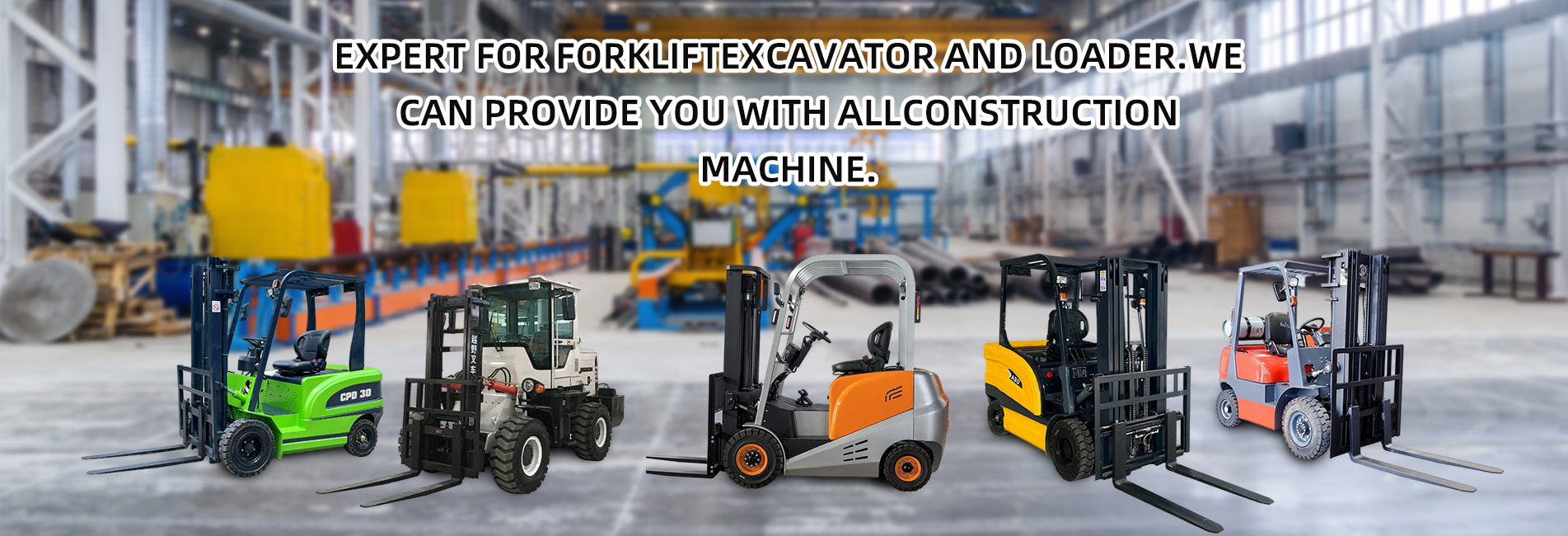
Enhancing Performance and Reliability of Electric Forklifts in Diverse Environments: A Full-Lifecycle Closed-Loop Management Approach
The core logic for improving the performance and reliability of electric forklifts across different environments lies in "full-lifecycle closed-loop management" — from source selection and adaptation, standardized in-operation practices, precise post-operation maintenance, to intelligent monitoring and early warning. By targeting core environmental factors such as temperature, humidity, dust, and corrosion, a precise matching of "environment - equipment - operation - maintenance" is achieved. Below is a structured, actionable implementation plan covering all scenarios and processes:
I. Source Control: Precise Selection by Environment (Core Precondition Guarantee)
Selection is the foundation for determining performance and reliability. To avoid "using general-purpose forklifts in special environments," equipment configurations must be tailored to environmental parameters to fundamentally reduce failure risks:
| Environmental Type | Core Selection Requirements (Directly Improve Performance/Reliability) | Key Configuration Upgrades |
|---|---|---|
| High Temperature (>45℃) | Prioritize "high-temperature adaptive" forklifts, focusing on "heat dissipation + high-temperature resistance" | 1. Battery: Lithium batteries with upgraded heat dissipation (forced air cooling/liquid cooling); lead-acid batteries with high-temperature resistant plates.2. Drive/Hydraulic: Enlarged motor heat sinks, independent heat dissipation modules for controllers (IGBT), hydraulic oil with high-temperature resistance ≥150℃ (e.g., ISO VG68).3. Seals: Fluororubber material (temperature resistance: -20℃~200℃) to prevent aging and leakage. |
| Low Temperature (<-10℃) | Prioritize "low-temperature dedicated" forklifts, focusing on "low-temperature resistance + energy retention" | 1. Battery: Lithium batteries with heating films (startable after 30-minute preheating), wide-temperature cells (operating temperature: -20℃~55℃); lead-acid batteries with low-freezing-point electrolyte (no freezing at -25℃).2. Hydraulic System: Hydraulic oil with low-temperature grade ≤-20℃ (e.g., ISO VG32), equipped with oil circuit preheating devices.3. Electronic Components: ECU/BMS with low-temperature protection (insulated casing + moisture-proof design). |
| Humid/High Humidity (>85% RH) | Prioritize "waterproof and dustproof" forklifts, focusing on "insulation + condensation prevention" | 1. Protection Rating: Key components (ECU, battery, motor) with IP65+, overall IP54+.2. Electronic Components: Circuit boards with three-proof coating (moisture-proof, salt spray-proof, corrosion-proof); nickel-plated terminals + conductive paste.3. Brake System: Waterproof brake fluid (boiling point ≥230℃) to avoid failure due to water absorption. |
| Dust/Particulates (>5mg/m³) | Prioritize "seal-enhanced" forklifts, focusing on "dust intrusion prevention + easy cleaning" | 1. Power System: Sealed motors, detachable dust screens for heat sinks.2. Hydraulic System: Upgraded high-precision filters (5μm), bypass filtration devices to avoid oil contamination.3. Operating Components: Dust covers for control levers, sealed instruments. |
| Corrosive Environment (Chemical Plants/Coastal Areas) | Prioritize "corrosion-resistant dedicated" forklifts, focusing on "corrosion resistance + material upgrade" | 1. Metal Structure: Frames and forks made of stainless steel or anti-corrosion coating (epoxy zinc-rich paint); fasteners of 316L stainless steel.2. Seals: Fluororubber/PTFE materials to resist acid-base corrosion.3. Electronic Components: Anti-corrosion encapsulation, battery terminals with anti-corrosion sleeves. |
| Sloped/Uneven Ground (Slope >8%) | Prioritize "off-road enhanced" forklifts, focusing on "impact resistance + stability" | 1. Drive System: Reinforced drive axles (thickened gears, upgraded bearings), off-road tires (deepened treads, thickened casings).2. Hydraulic System: Shock absorption valves to reduce pressure fluctuations on pumps and valves.3. Structural Design: High ground clearance (≥150mm), reinforced battery pack fixation (anti-loosening). |
| Plateau (Altitude >3000m) | Prioritize "plateau adaptive" forklifts, focusing on "heat dissipation + power compensation" | 1. Power System: Motors with upgraded plateau heat dissipation modules (enlarged heat dissipation area), controllers supporting power compensation (maintain ≥80% power at 3000m altitude).2. Battery: Lithium batteries with plateau cooling fans; lead-acid batteries with optimized charging curves (low-voltage slow charging).3. Sensors: Pressure sensors calibrated for plateau mode to avoid signal distortion. |
II. Process Optimization: Standardized Operation by Environment (Directly Improve Performance Stability)
For the same forklift, operating methods directly affect performance output and component lifespan in different environments. "Environment-specific operation specifications" must be formulated to avoid failures caused by improper operation:
1. Operation Specifications for Temperature Environments (Core: "Temperature Control + Load Control")
High-Temperature Environment:
Low-Temperature Environment:
2. Operation Specifications for Humid/Dusty/Corrosive Environments (Core: "Intrusion Prevention + Residue Prevention")
Humid Environment:
Dusty Environment:
Corrosive Environment:
3. Operation Specifications for Ground/Altitude Environments (Core: "Impact Reduction + Load Reduction")
Sloped/Uneven Ground:
Plateau Environment:
III. Maintenance Enhancement: Precise Maintenance by Environment (Extend Lifespan + Reduce Failures)
Forklift wear parts and aging rates vary significantly across environments. "Unified maintenance cycles" must be abandoned, and an "environment-differentiated maintenance plan" established to focus on strengthening vulnerable systems:
| Environmental Type | Key Maintenance Systems | Differentiated Maintenance Measures (vs. Normal Environments) | Maintenance Cycle Optimization |
|---|---|---|---|
| High Temperature | Battery, Drive, Hydraulic | 1. Battery: Clean heat dissipation channels weekly; test cell voltage difference monthly (lithium ≤0.3V, lead-acid ≤0.5V); calibrate BMS over-temperature threshold quarterly.2. Drive: Inspect motor heat sinks weekly (no dust accumulation); test controller temperature monthly (normal ≤60℃).3. Hydraulic: Test hydraulic oil viscosity monthly (avoid thinning); replace hydraulic oil filter every 200 hours. | 70% of normal cycle (e.g., replace hydraulic oil every 350 hours instead of 500). |
| Low Temperature | Battery, Hydraulic, Electronic | 1. Battery: Test capacity quarterly (maintain if<80% of rated); inspect heating film operation monthly.2. Hydraulic: replace low-temperature hydraulic oil quarterly (avoid abnormal viscosity after aging); check oil circuit preheating devices.3. Electronic: Clean ECU/BMS interfaces monthly (prevent condensation corrosion). | 80% of normal cycle (e.g., calibrate sensors every 5 months instead of 6). |
| Humid | Control, Safety, Battery | 1. Control: Clean terminals weekly (remove oxide layer); test line insulation resistance monthly (≥1MΩ).2. Safety: Test brake fluid water content monthly (≤0.1%); replace brake fluid quarterly.3. Battery: Inspect seals quarterly (no damage); clean battery compartment condensation. | 60% of normal cycle (e.g., replace seals every 6 months instead of 12). |
| Dust | Hydraulic, Drive, Control | 1. Hydraulic: replace filter every 200 hours (vs. 500 normally); test hydraulic oil contamination level monthly (NAS ≤8).2. Drive: Clean motor dust screens weekly; inspect drive axle lubricating oil monthly (no dust contamination).3. Control: Clean control lever potentiometers weekly (prevent jamming). | 50% of normal cycle (e.g., clean heat sinks every 1.5 months instead of 3). |
| Corrosive | Metal Structure, Seals, Battery | 1. Metal: Inspect frame/fork rust quarterly (rust depth ≤0.3mm); reapply anti-corrosion paint annually.2. Seals: replace every 6 months (vs. 12 normally) with fluororubber materials.3. Battery: Clean terminals monthly (remove corrosion layer); apply conductive paste for protection. | 50% of normal cycle (e.g., inspect metal structure every 3 months instead of 6). |
| Sloped/Uneven Ground | Drive Axle, Hydraulic, Tires | 1. Drive Axle: Inspect gear wear monthly (no pitting on tooth surfaces); replace lubricating oil every 300 hours (vs. 500 normally).2. Hydraulic: Inspect shock absorption valves monthly (no jamming); test hydraulic pump pressure fluctuation quarterly (≤3MPa).3. Tires: Inspect wear weekly (tread depth ≥3mm); tighten tire bolts monthly. | 70% of normal cycle (e.g., replace tires every 7 months instead of 12). |
| Plateau | Drive, Battery, Sensors | 1. Drive: Clean motor heat sinks quarterly; test motor power semi-annually (≥80% of rated).2. Battery: Inspect heat dissipation modules quarterly (normal operation); test cell temperature monthly (normal ≤55℃).3. Sensors: Calibrate pressure sensors semi-annually (error ≤10%). | 80% of normal cycle (e.g., calibrate sensors every 8 months instead of 12). |
IV. Intelligent Monitoring: Data-Driven Early Warning (Proactive Intervention + Avoid Failure Escalation)
Leverage electric forklifts' intelligent systems (BMS, ECU, sensors) to establish a "environment - equipment parameter" linked monitoring mechanism. Through data-driven management, early warning of risks is achieved to prevent minor failures from escalating into severe ones:
1. Core Monitoring Parameters and Warning Thresholds (Environment-Adapted)
| Monitoring System | Key Parameters | Environment-Differentiated Warning Thresholds | Post-Warning Actions |
|---|---|---|---|
| Battery Management System (BMS) | Cell temperature, voltage difference, SOC | High temperature: Warning if cell temperature >45℃; Low temperature: Warning if SOC >20% but voltage<3.2v lithium="" battery:="" warning="" if="" voltage="" difference="">0.3V. | High temperature: Stop for cooling; Low temperature: Start preheating; Large voltage difference: Balanced charging or cell replacement. |
| Drive System | Motor temperature, current, speed | High temperature: Warning if motor temperature >60℃; Plateau: Warning if current >1.2x rated; Slope: Warning if speed fluctuation >20%. | Stop for cooling; Reduce load; Inspect drive axle gear wear. |
| Hydraulic System | Oil temperature, pressure, contamination level | High temperature: Warning if oil temperature >65℃; Dust: Warning if contamination level NAS ≥9; Humid: Warning if oil water content >0.1%. | replace hydraulic oil; replace filter; Oil-water separation treatment. |
| Control System | Insulation resistance, communication status | Humid: Warning if insulation resistance<1MΩ; Corrosive: Warning if communication interruptions ≥3 times/hour. | Clean line connectors; replace corroded components; Re-encapsulate circuit boards. |
| Environmental Sensors | Temperature, humidity, dust concentration | Preset environmental thresholds (e.g., high temperature >45℃, high humidity >85% RH); automatically prompt operation adjustments when exceeded. | Adjust operation rhythm (e.g., shorten continuous operation time at high temperatures); Activate protective measures (e.g., dehumidification at high humidity). |
2. Data-Driven Management Tools
V. Core Principle Summary (Key to Implementation)
Through the above full-process measures, the following results can be achieved:
Truly realizing the dual goals of "stable performance output + enhanced reliability."